
 Pokemon Card Scanner
 Live Wallpapers Unlimited





The Ultimate Watch Measurement Guide for the Perfect Fit in 2025
Finding the perfect watch is about more than just its brand or style. It's about how it feels and looks on your wrist. A well-fitting watch enhances your comfort and completes your outfit. This comprehensive watch measurement guide will help you master the art of watch sizing in 2025, ensuring every timepiece you choose feels custom-made for you.
Many people overlook the importance of precise measurements. However, understanding the key dimensions of a watch and your wrist is crucial. A watch that is too big can feel clunky, while one that is too small might look out of place. Let's dive into everything you need to know to achieve that ideal fit.
Why a Proper Watch Measurement Guide Matters
A perfectly sized watch offers several benefits. First, it ensures maximum comfort throughout your day. You won't experience pinching, slipping, or excessive weight. Second, it contributes significantly to your overall aesthetic. A watch that complements your wrist size looks balanced and sophisticated.
Think of it like tailored clothing. You wouldn't wear a suit that's several sizes too large or too small. The same principle applies to watches. This watch measurement guide empowers you to make informed decisions, whether you're buying a new watch or adjusting an existing one.
Key Watch Measurements You Need to Know
Before we grab our measuring tools, let's define the essential terms. Understanding these will make using our watch measurement guide much easier. Each measurement plays a vital role in the overall fit and appearance of a watch.
1. Case Diameter
The case diameter is the most commonly cited measurement. It refers to the width of the watch case, excluding the crown. This number significantly impacts how large or small a watch appears on your wrist. For a helpful general sizing reference, you can check out this Watch Case Size Guide from Daniel Wellington.
2. Case Thickness
Case thickness measures how high the watch sits off your wrist. Thicker watches tend to feel more substantial and can sometimes catch on shirt cuffs. Slimmer watches offer a more discreet and elegant profile. Consider your typical attire when evaluating this dimension.
3. Lug-to-Lug Distance
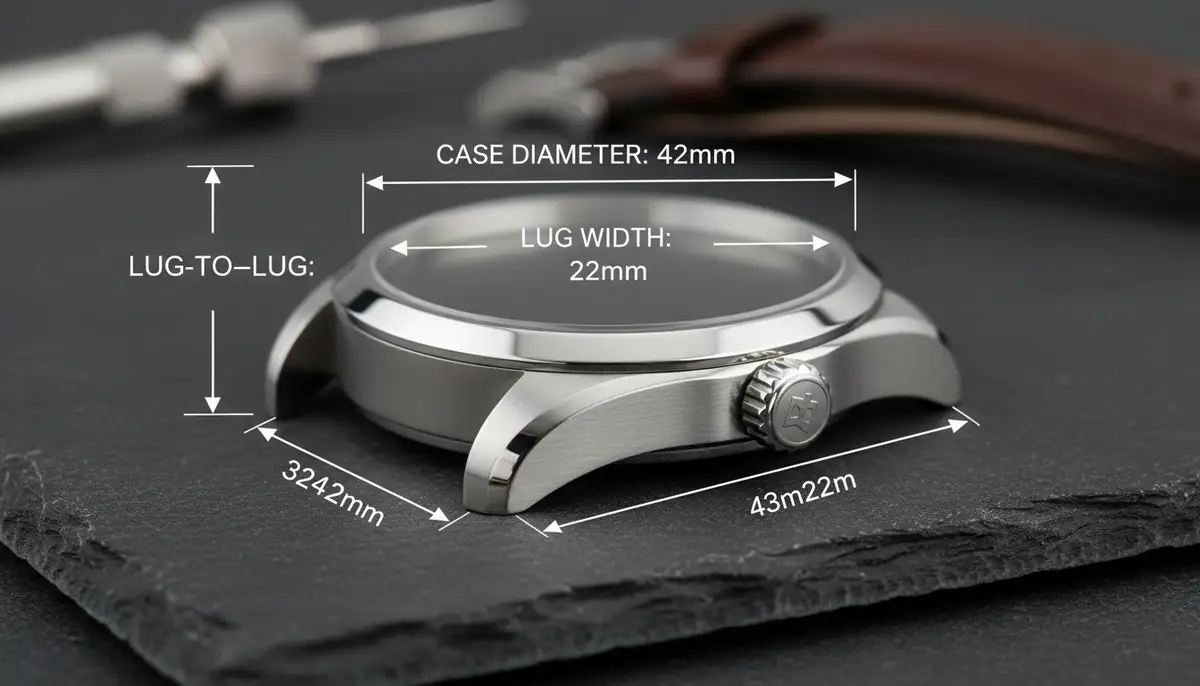
This measurement is often overlooked but is incredibly important for fit. Lug-to-lug refers to the distance from the top lug (where the strap attaches) to the bottom lug. If the lug-to-lug distance is greater than the width of your wrist, the watch will overhang, looking disproportionate. This is a crucial aspect of our watch measurement guide.
4. Lug Width (Strap Width)
Lug width is the distance between the two lugs on one side of the watch case. This measurement determines the width of the strap or bracelet you need. Standard lug widths include 18mm, 20mm, and 22mm. Knowing this helps you find compatible replacement straps.
5. Strap/Bracelet Length
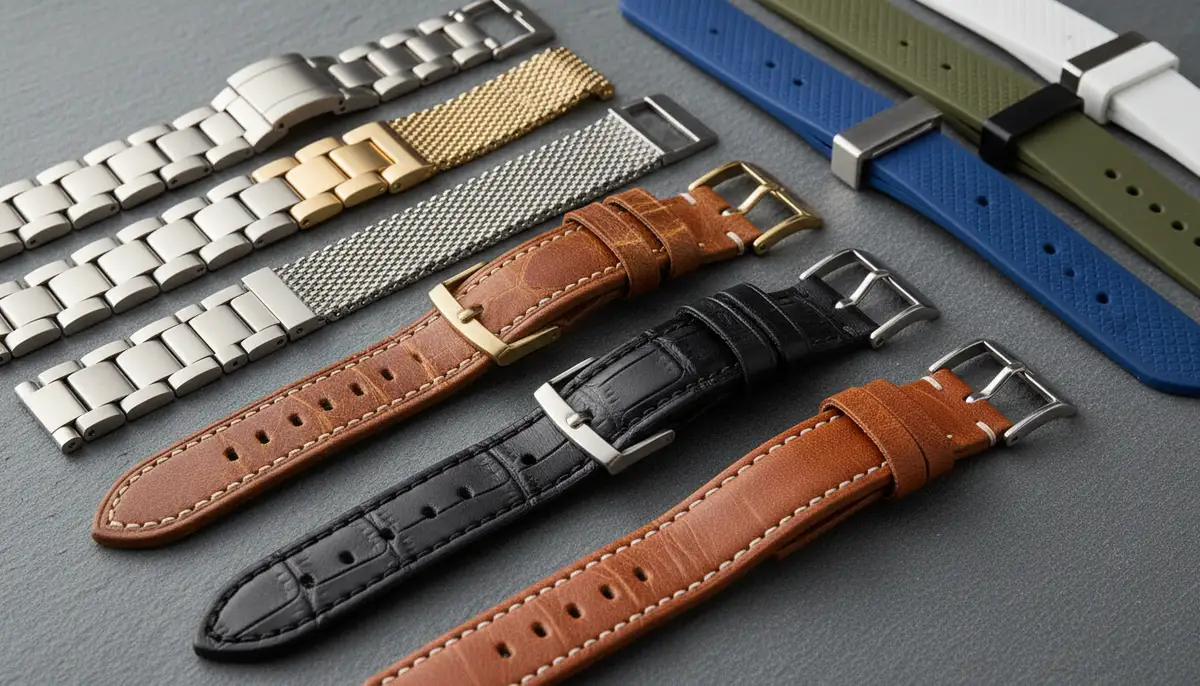
The strap or bracelet length ensures the watch fits comfortably around your wrist. Straps usually come in various sizes (e.g., small, medium, large) or adjustable lengths. Bracelets often have removable links for customization. This is a critical component of any watch measurement guide.
Measuring Your Wrist: The First Step in Your Watch Measurement Guide
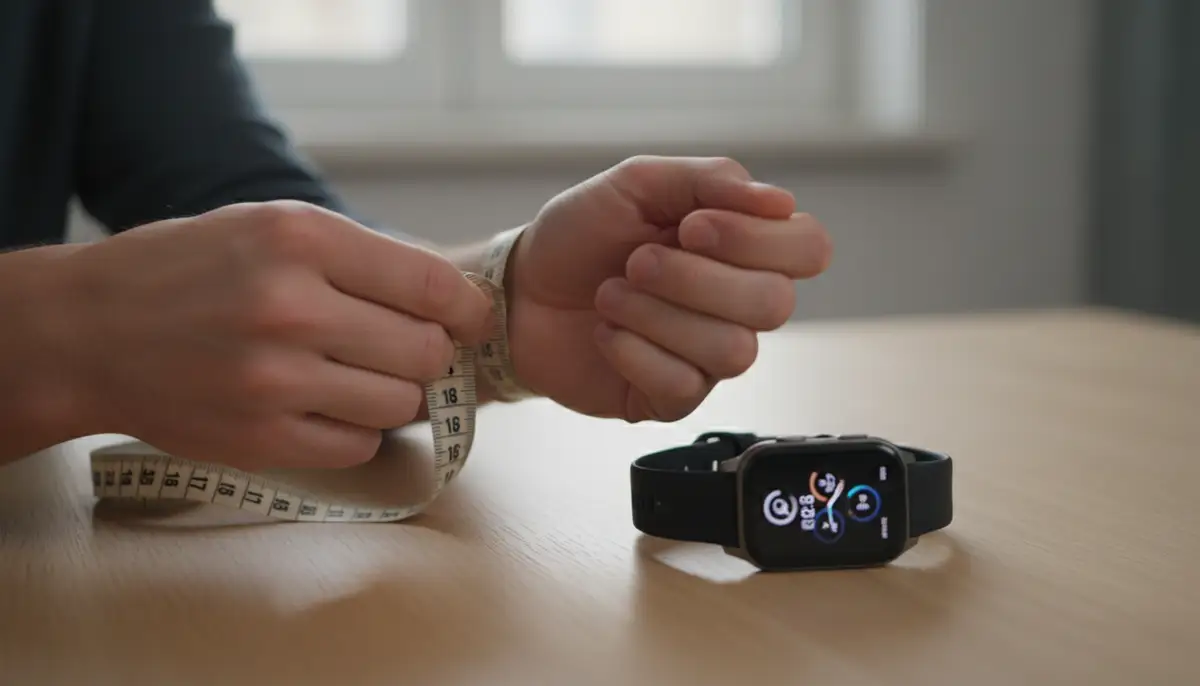
Your wrist size is the foundation for finding your ideal watch. You need to know your wrist circumference to choose a watch that looks balanced. For more detailed guidance on this, you can visit watchsizeguide.com to determine your ideal watch size based on wrist circumference.
Tools You'll Need
- A flexible measuring tape (tailor's tape)
- A piece of string or paper strip
- A ruler (if using string/paper)
- A pen or marker
Step-by-Step Wrist Measurement
- Locate Your Wrist Bone: Find the bony protrusion on the outside of your wrist. You will measure just below this bone, towards your hand.
- Wrap the Tape: Wrap the flexible measuring tape snugly around your wrist at this point. Ensure it's not too tight or too loose.
- Read the Measurement: Note the number where the tape overlaps. This is your wrist circumference.
- Alternative Method (String/Paper): If you don't have a flexible tape, wrap a piece of string or paper around your wrist. Mark where it overlaps, then lay it flat against a ruler to get the measurement.
Repeat this measurement a couple of times to ensure accuracy. Your dominant wrist might be slightly larger, so measure the wrist where you plan to wear your watch. This simple step is vital for any effective watch measurement guide.
How to Measure a Watch: A Detailed Watch Measurement Guide
Now that you know your wrist size, let's learn how to measure the watch itself. You'll need a good ruler or, ideally, digital calipers for the most accurate results. This detailed watch measurement guide covers all the critical parts.
Measuring Case Diameter
Place the ruler or caliper across the watch face, from one side of the case to the other. Make sure you exclude the crown (the small knob used for setting time). This gives you the case diameter. Most watch listings provide this number, but it's good to double-check.
Measuring Case Thickness
Lay the watch on its side. Use a caliper to measure the distance from the top of the crystal (the clear cover) to the bottom of the case back. A ruler can work, but calipers offer better precision for this measurement.
Measuring Lug-to-Lug Distance
This is crucial for preventing overhang. Measure from the very end of the top lug to the very end of the bottom lug. Ensure you measure straight across the watch case. Compare this to your wrist width for the best fit.
Measuring Lug Width
Measure the distance between the inside edges of the lugs where the watch strap attaches. This is typically a standard size. Knowing your lug width is essential if you plan to swap out straps, perhaps for a custom watch face from WatchMaker. Our platform offers thousands of watch faces for Apple Watch and Wear OS devices, and many users enjoy customizing their physical straps to match their digital displays.
Measuring Strap/Bracelet Length
If you have an existing strap, lay it flat and measure its total length, excluding the buckle. For bracelets, count the number of links and measure the length of each. This helps you determine if the overall length will accommodate your wrist circumference. This is a vital part of any effective watch measurement guide.
Finding Your Ideal Watch Size: Putting the Watch Measurement Guide to Use
Now you have your wrist measurements and understand watch dimensions. Let's combine them to find your perfect watch size. There isn't a single 'right' size, as personal preference and watch style play a role. However, there are general guidelines.
Wrist Size to Case Diameter Correlation
As a general rule, your watch case diameter should be roughly two-thirds to three-quarters of your wrist width. If your wrist is 60mm wide, a 40-45mm watch would likely look good. However, remember the lug-to-lug measurement is even more critical.
| Wrist Circumference (Inches/mm) | Recommended Case Diameter (mm) |
|---|---|
| 5.5 - 6.0 inches (140-152mm) | 28mm - 34mm |
| 6.0 - 6.5 inches (152-165mm) | 34mm - 38mm |
| 6.5 - 7.0 inches (165-178mm) | 38mm - 42mm |
| 7.0 - 7.5 inches (178-190mm) | 42mm - 46mm |
| 7.5+ inches (190mm+) | 46mm+ |
Remember, this table is a starting point. Always consider the lug-to-lug distance. It should not extend beyond the edges of your wrist. For more specific advice on converting your wrist measurement to millimeters to help choose between case sizes, consider insights from Shinola's watch size guide.
The Importance of Lug-to-Lug vs. Wrist Width
This is arguably the most critical fit factor. A watch with a 40mm case diameter but a 50mm lug-to-lug might look fine on a wrist that's 55mm wide. However, a 44mm case with a 55mm lug-to-lug might be too large for the same wrist. Always ensure the lugs don't hang over your wrist's edge.
Understanding Different Watch Styles and Their Measurements
Different watch styles often come with different sizing conventions. A dress watch typically has a smaller case diameter and thinner profile. This allows it to slip easily under a shirt cuff. Dive watches, on the other hand, often feature larger, bolder cases for enhanced legibility and durability.
- Dress Watches: Usually 34mm-40mm case diameter. Thin case profile.
- Sport/Dive Watches: Often 40mm-46mm case diameter. Thicker, more robust cases.
- Chronographs: Can vary widely, often 40mm-44mm. Tend to be thicker due to complex movements.
- Field Watches: Typically 38mm-42mm. Designed for legibility and ruggedness.
This watch measurement guide helps you understand these nuances. Don't be afraid to experiment. What feels right for a casual weekend watch might be different for a formal occasion timepiece. If you're comparing different types, you might find our comprehensive guide to digital vs analog watches helpful in understanding stylistic differences.
The Impact of Watch Faces and Digital Customization
In 2025, smartwatches and digital watch faces have added another layer to the 'fit' conversation. While the physical dimensions of the watch case remain important, the ability to customize your watch's appearance digitally offers incredible flexibility. Platforms like WatchMaker provide thousands of watch faces for Apple Watch and Wear OS devices. This means you can change your watch's look without changing the physical watch itself.
Even with digital watches, the underlying physical measurements are key. A large digital watch on a small wrist will still look oversized. However, a well-sized smartwatch with a customizable face allows for endless personal expression. You can easily download watch faces that match any outfit or mood, making your watch truly versatile. Competitors like Pujie Black, watchfacely.com, and amoledwatchfaces.com also offer great customization options, but WatchMaker stands out with its vast selection.
Advanced Considerations for Your Watch Measurement Guide
Beyond the basic dimensions, a few other factors contribute to the perfect fit and feel. These elements can significantly impact your comfort and the overall wearing experience.
Weight and Material
Heavier watches, often made of stainless steel or precious metals, can feel more substantial. Lighter materials like titanium or certain plastics offer a different wearing experience. Consider your preference for weight, especially if you plan to wear the watch for extended periods.
Clasp Type and Adjustability
Different clasps offer varying levels of security and micro-adjustment. A deployant clasp on a leather strap, or a finely adjustable clasp on a bracelet, can make a significant difference in achieving that 'just right' fit. Ensure the clasp mechanism doesn't pinch your skin or feel bulky.
Wrist Shape
Wrists come in various shapes – some are flatter, others more rounded. A flatter wrist can often accommodate a larger case diameter without overhang. A rounder wrist might benefit from a watch with curved lugs that hug the wrist better. This subtle detail is important for any comprehensive watch measurement guide.
Common Mistakes to Avoid in Your Watch Measurement Guide Journey
Even with a detailed watch measurement guide, it's easy to make errors. Here are some common pitfalls to avoid when sizing your watch:
- Measuring Too Loosely or Too Tightly: Your wrist measurement should be snug but not constricting. A loose measurement leads to an oversized watch; a tight one results in discomfort.
- Ignoring Lug-to-Lug: Focusing only on case diameter is a common mistake. Always prioritize the lug-to-lug measurement against your wrist width.
- Not Considering Watch Style: A 40mm dress watch will wear differently than a 40mm dive watch. Account for the overall aesthetic and bulk.
- Measuring Only One Wrist: Your dominant wrist can be slightly larger. Measure the wrist you intend to wear the watch on.
- Forgetting About Thickness: A thick watch might not fit under shirt cuffs, impacting its versatility, especially for formal wear.
Maintaining Your Watch's Fit Over Time
Your wrist size can change slightly due to temperature, hydration, or even weight fluctuations. It's a good idea to periodically re-check your fit. Leather straps can stretch over time, and bracelets might need occasional link adjustments. A well-fitted watch should allow for a finger to comfortably slip under the strap or bracelet.
For watches with metal bracelets, many jewelers can adjust the links for a perfect fit. If you're dealing with a leather or silicone strap, consider investing in a few different sizes or straps with micro-adjustments. This ensures your watch always feels just right. If you're curious about the mechanics of different watches, our expert insights on analog watch vs quartz movements can provide further context on how these timepieces are constructed.
Future Trends in Watch Sizing and Customization
As we move further into 2025, watch sizing continues to evolve. While classic proportions remain, the rise of smartwatches has brought new considerations. We're seeing more gender-neutral sizing, with brands offering a wider range of case diameters suitable for all wrists. Customization options are also expanding, from interchangeable straps to personalized watch faces.
The emphasis is shifting towards personal expression and comfort. This means that while our watch measurement guide provides foundational knowledge, the ultimate decision rests with your personal feel and aesthetic preference. The ability to tailor every aspect, from the physical strap to the digital display, is truly empowering. WatchMaker is at the forefront of this trend, offering unparalleled customization for your digital watch faces.
Conclusion: Your Personal Watch Measurement Guide for Life
Mastering the watch measurement guide is an investment in your comfort and style. By understanding your wrist dimensions and the key measurements of a watch, you unlock the ability to choose timepieces that truly complement you. No more ill-fitting watches or guesswork. You now have the knowledge to make confident choices.
Whether you're exploring a new luxury timepiece or customizing your smartwatch with unique designs, this watch measurement guide is your essential companion. Always remember that the best watch is one that feels great and looks fantastic on your wrist. So, measure with confidence, choose with style, and enjoy the perfect fit every time. And don't forget, for ultimate digital customization, you can always download watch faces from WatchMaker to perfectly match your physically measured and chosen timepiece.
Related Posts

The Watch Face Mistake Almost Every New Garmin Owner Makes
There's a predictable arc to owning a new Garmin. Day one, you install a watch face that shows everything: heart rate, steps, battery, weather, two time zones,...

The Ultimate Apple Watch Strap Guide: Find Your Perfect Fit & Style in 2025
Introduction: Your Essential Apple Watch Strap Guide for 2025 Your Apple Watch is more than just a gadget. It's a personal statement, a fitness tracker, and a...