
 Pokemon Card Scanner
 Live Wallpapers Unlimited





The Inner Workings: A Deep Dive into How Do Watch Movements Work
Have you ever paused to consider the tiny, intricate world hidden beneath the dial of your watch? It's a marvel of engineering, a miniature machine that quietly keeps track of every second. Understanding how do watch movements work reveals the genius behind timekeeping itself. Whether you wear a classic mechanical timepiece, a precise quartz watch, or a feature-packed smartwatch, each relies on a unique system to mark the passage of time. This guide will explore these fascinating mechanisms, breaking down their complexities into understandable parts. You will gain a new appreciation for the device on your wrist and truly grasp how do watch movements work.
The Heart of Timekeeping: How Do Watch Movements Work?
At its core, a watch movement is the engine that powers your timepiece. It's responsible for moving the hands, displaying the date, and performing any other functions your watch might have. Without a movement, a watch is just a pretty bracelet. These movements are the culmination of centuries of innovation, blending artistry with precision engineering. They transform raw energy into the rhythmic pulse that defines our daily lives. Knowing how do watch movements work helps you appreciate the craftsmanship involved.
The history of watchmaking is a story of continuous refinement. Early timekeeping devices were large and often inaccurate. Over time, inventors and craftsmen miniaturized these mechanisms, making them wearable. From the first portable clocks in the 16th century to the incredibly precise instruments of today, the fundamental goal has remained the same: to measure time accurately and reliably. This journey led to the diverse types of movements we see now.
Mechanical Movements: The Traditional Artistry
Mechanical watches represent the pinnacle of traditional watchmaking. They operate without a battery, relying solely on a complex arrangement of springs, gears, and levers. These watches are often prized for their craftsmanship, heritage, and the smooth, sweeping motion of their second hand. They embody a direct connection to centuries of horological skill. Let's explore the two main types of mechanical movements and truly understand how do watch movements work in this classic form.
Manual-Wind Movements: The Personal Connection
A manual-wind watch requires you to physically turn the crown to power it. This action tightens a coiled spring called the mainspring. The stored energy in the mainspring then slowly unwinds, driving a series of gears. This gear train, in turn, powers the hands of the watch. Many enthusiasts enjoy the ritual of winding their watch daily. It creates a personal connection to the timepiece, a moment of interaction. This direct engagement is a key part of their appeal. If you want to learn more about setting such a watch, check out our comprehensive guide on how to set mechanical watch.
- Mainspring: The power source, a long strip of metal coiled tightly inside a barrel.
- Barrel: A cylindrical housing that contains the mainspring and transmits its power.
- Gear Train: A series of interconnected gears that transmit power from the mainspring to the escapement and hands.
- Escapement: The regulating mechanism that releases the mainspring's energy in controlled, tiny increments.
- Balance Wheel: A weighted wheel that oscillates back and forth, regulating the timekeeping accuracy.
- Hairspring: A tiny, delicate spring attached to the balance wheel, controlling its oscillation rate.
Automatic Movements: Self-Winding Convenience
Automatic, or self-winding, watches build upon the manual-wind design. They include an additional component called a rotor. This rotor is a semi-circular weight that pivots freely. As you move your wrist throughout the day, the rotor spins, automatically winding the mainspring. This means you don't need to manually wind the watch, as long as you wear it regularly. It's a convenient feature for daily wearers. For a deeper dive into the nuances of these mechanisms, you can find a comprehensive explanation of watch movements on Teddy Baldassarre's blog.
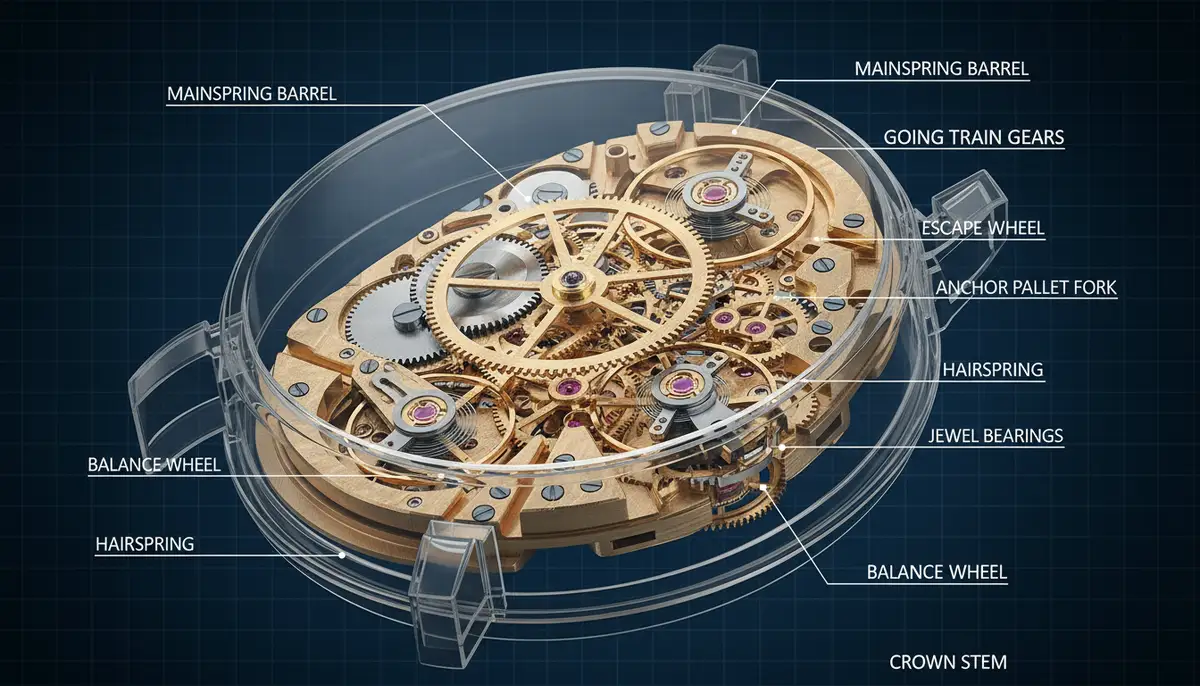
Automatic movements typically offer a 'power reserve,' meaning they can continue running for a certain period (often 38-80 hours) even after being taken off your wrist. If the power reserve runs out, you simply wind it manually a few turns or wear it again to restart the self-winding process. The main advantage is the 'set it and forget it' convenience, making them very popular. However, they are generally thicker and heavier than manual-wind watches due to the added rotor mechanism.
Inside a Mechanical Movement: Key Components
To truly understand how do watch movements work, you need to know their core parts. Every mechanical watch, whether manual or automatic, shares a common set of components that work in harmony. These parts are often incredibly small and require immense precision to manufacture and assemble. The interplay of these elements is what creates the magic of a mechanical timepiece. It's a testament to micro-engineering.
- Mainspring and Barrel: The mainspring, housed in the barrel, is the power source. When wound, it stores potential energy. As it slowly unwinds, it releases this energy to drive the watch. Think of it like a miniature, constantly unwinding battery.
- Gear Train: A series of precisely cut gears and pinions. This train transmits the power from the mainspring to the escapement and ultimately to the watch hands. Each gear reduces the speed and increases the torque, ensuring the hands move at the correct rate.
- Escapement: This is the heart of a mechanical watch's accuracy. It's a device that releases the mainspring's energy in controlled, precise pulses. The escapement works with the balance wheel to divide time into equal, tiny increments. You can learn more about how an escapement functions in detail on Wikipedia.
- Balance Wheel: The 'brain' of the watch, the balance wheel oscillates back and forth, usually at a rate of several times per second. Its consistent rhythm dictates the accuracy of the watch. It's essentially a tiny, highly precise pendulum.
- Hairspring: A very fine, spiral spring attached to the balance wheel. The hairspring controls the speed of the balance wheel's oscillations. Its elasticity and precise coiling are crucial for the watch's accuracy. Even a tiny deformation can significantly impact timekeeping.
- Jewels: Small synthetic rubies or sapphires used as bearings for the pivots of the gears. Jewels reduce friction and wear, extending the life and improving the accuracy of the movement. They are critical for the longevity of the delicate components.
| Feature | Manual-Wind Movement | Automatic Movement |
|---|---|---|
| Power Source | Hand-wound mainspring | Self-winding rotor (plus manual winding) |
| Winding Frequency | Daily or every 1-2 days | Worn regularly to stay wound |
| Thickness | Generally thinner | Generally thicker (due to rotor) |
| Weight | Lighter | Heavier |
| Interaction | High (daily winding ritual) | Low (wear and go) |
| Power Reserve | Typically 38-50 hours | Typically 38-80 hours |
Quartz Movements: Modern Precision
Quartz watches revolutionized the industry in the late 20th century. They offer incredible accuracy and affordability, making reliable timekeeping accessible to everyone. Unlike mechanical watches, quartz movements rely on electronics and a battery. This fundamental difference simplifies the internal mechanics significantly. Many people prefer the 'grab and go' convenience of a quartz watch. They rarely require winding or setting, unless the battery dies.
How Quartz Movements Function
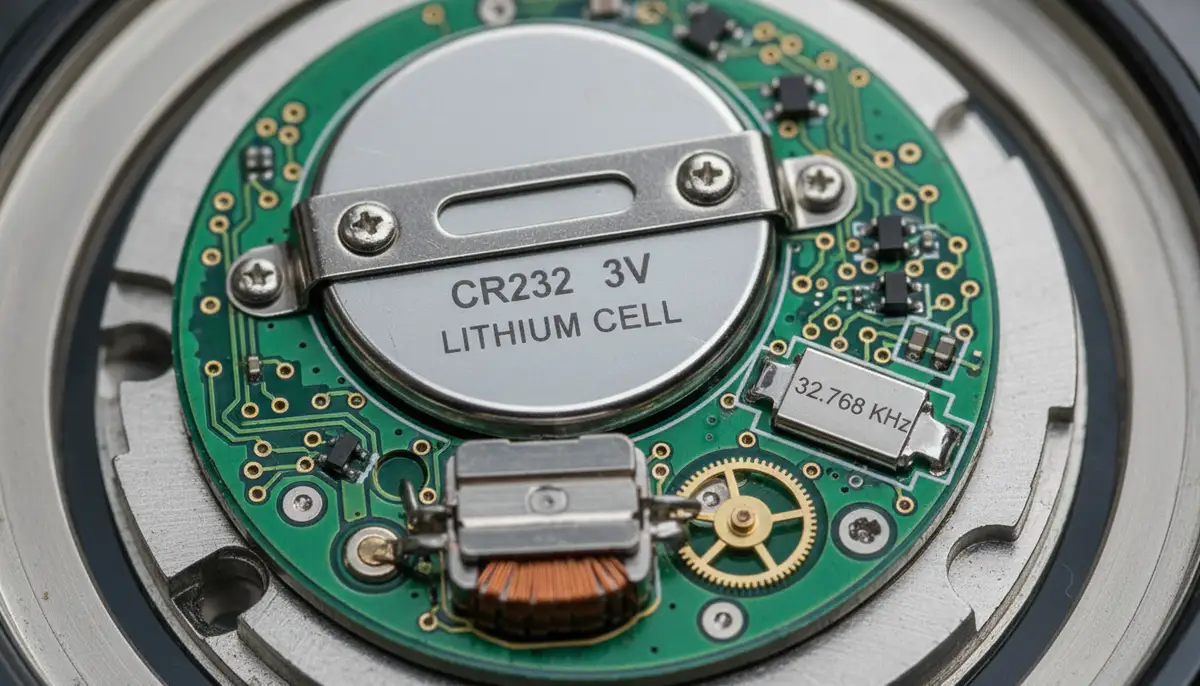
So, how do watch movements work when they're powered by quartz? The process begins with a battery. This battery sends an electric current through a small quartz crystal. When electricity passes through it, the quartz crystal vibrates at a very precise frequency, usually 32,768 times per second. This consistent vibration is the secret to a quartz watch's accuracy. An integrated circuit then counts these vibrations. This is how do watch movements work with such high precision.
- Battery: Provides the electrical power for the entire movement.
- Quartz Crystal: An oscillator that vibrates at a precise frequency when an electric current passes through it.
- Integrated Circuit (IC): Counts the vibrations from the quartz crystal and converts them into regular electrical pulses.
- Stepping Motor: Receives the electrical pulses from the IC and converts them into mechanical energy, turning the gears.
- Gear Train: Transmits the motion from the stepping motor to the watch hands.
The integrated circuit then sends a pulse to a tiny stepping motor once every second. This motor moves the gear train, which in turn advances the watch hands. This entire process is highly efficient and incredibly accurate. Quartz watches are generally much more accurate than mechanical watches. They can maintain time within a few seconds per month, compared to mechanical watches which might gain or lose several seconds per day. They are also more shock-resistant and require less maintenance than their mechanical counterparts.
However, quartz watches do require battery replacement every few years. The smooth sweep of a mechanical second hand is also replaced by a distinct 'tick' in most quartz movements. Despite this, their reliability and affordability make them a popular choice for everyday wear. They represent a blend of modern technology and practical design.
Hybrid and Smartwatch Movements: The Future of Time
The watch industry continues to evolve, bringing us hybrid and smartwatch movements. These innovations blend traditional aesthetics with cutting-edge technology. Hybrid smartwatches, for instance, often feature a traditional analog dial and hands but incorporate smart features. They might track steps, receive notifications, or monitor sleep, all while looking like a classic timepiece. This fusion offers the best of both worlds for many users.
Smartwatches, like the Apple Watch or Wear OS devices, take a different approach. They are essentially miniature computers worn on the wrist, powered by advanced digital movements. These movements are entirely electronic, featuring processors, sensors, and operating systems. They offer a vast array of functions beyond telling time, from fitness tracking and communication to mobile payments. The 'movement' here is a digital one, processing data rather than turning gears. If you're looking to personalize your smartwatch experience, WatchMaker offers a vast repository of thousands of download watch faces for both Apple Watch and Wear OS devices. We also keep an eye on other great solutions in the market, like Pujie Black, buddywatch.app, and amoledwatchfaces.com, which also offer excellent customization options.
Understanding the Complications: Beyond Basic Timekeeping
Beyond simply telling time, many watches offer additional functions called 'complications.' These add layers of utility and complexity to the movement. A complication is any function a watch performs other than displaying hours, minutes, and seconds. These features showcase the incredible ingenuity of watchmakers. They highlight just how sophisticated watch movements can become. Understanding these special features further explains how do watch movements work in advanced timepieces.
Chronograph Movements
A chronograph is essentially a stopwatch built into a watch. It allows you to measure elapsed time independently of the main time display. Chronograph movements are incredibly complex, often involving additional gear trains and levers. Pressing a pusher starts, stops, and resets the chronograph hands. This functionality is popular among pilots, racers, and anyone needing to time events precisely. Learning to operate one can be tricky, but our detailed guide on how to set chrono watch can help you master yours.
Date and Day-Date Functions
Most watches today include a date display, and many also show the day of the week. These functions are driven by additional gears and discs within the movement. A small finger or 'jumper' advances the date disc once every 24 hours. The mechanism is designed to click over precisely at midnight. Some advanced date mechanisms even account for the varying lengths of months. For a fascinating visual breakdown of how the date mechanism works, you can explore an interactive animation of a mechanical watch's date function on Bartosz Ciechanowski's website.
Other Advanced Complications
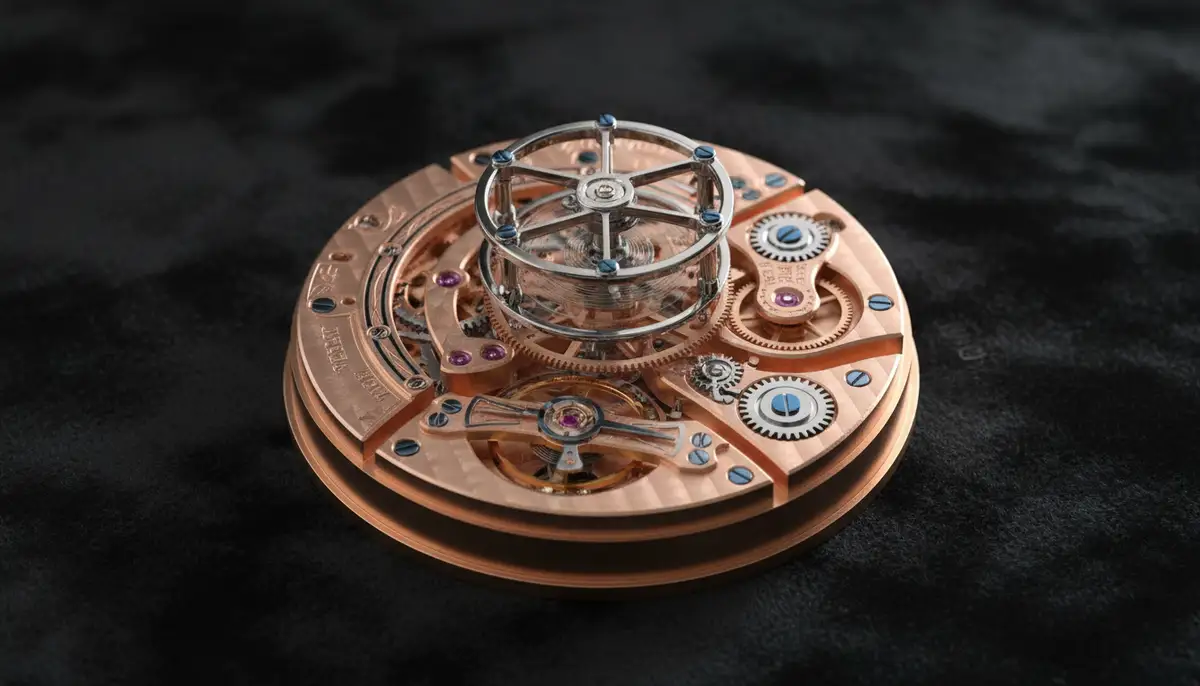
The world of watch complications is vast and endlessly creative. Some examples include: "Moon Phase" displays the current phase of the moon, appealing to astronomers and romantics alike. "GMT" (Greenwich Mean Time) or "Dual Time Zone" allows you to track a second time zone, perfect for frequent travelers. "Perpetual Calendars" automatically adjust for month lengths and leap years, requiring no manual correction until the year 2100. Then there are "Minute Repeaters," which chime the time on demand, and "Tourbillons," which are complex rotating cages designed to counteract the effects of gravity on the escapement, enhancing accuracy. These high complications truly showcase the peak of watchmaking artistry and engineering prowess. They are often found in very high-end timepieces.
How Do Watch Movements Work: Maintenance and Care
Regardless of the type, proper care ensures your watch movement continues to function reliably for years. Just like any precision machine, watches benefit from regular attention. Neglecting your watch can lead to decreased accuracy and costly repairs. Understanding how do watch movements work also means knowing how to care for them. This extends their life and preserves their value. It's an investment in your timepiece.
Mechanical Watch Care
- Regular Servicing: Mechanical watches need professional servicing every 3-5 years. This involves cleaning, lubricating, and adjusting the movement. Think of it like a tune-up for your car.
- Avoid Shocks: Mechanical movements are delicate. Avoid dropping your watch or exposing it to strong impacts. This can damage delicate pivots and gears.
- Magnetic Fields: Keep mechanical watches away from strong magnetic fields (e.g., speakers, MRI machines). Magnetism can affect the hairspring, leading to inaccurate timekeeping.
- Winding: If it's a manual-wind, wind it at the same time each day. For automatics, wear it regularly or use a watch winder to keep it powered.
- Water Resistance: Always check your watch's water resistance rating before exposing it to water. Ensure the crown is pushed in or screwed down securely.
Quartz Watch Care
- Battery Replacement: Replace the battery promptly when it dies. Leaving a dead battery in the watch can lead to leakage and damage the movement. Use a reputable watchmaker for this service.
- Water Resistance: Like mechanical watches, respect the water resistance rating. Ensure the crown is properly sealed after any adjustments.
- Avoid Extreme Temperatures: While more robust than mechanicals, extreme heat or cold can affect battery life and the quartz crystal's oscillation.
- Cleaning: Keep the case and crystal clean with a soft cloth. Avoid harsh chemicals that could damage seals or finishes.
Choosing Your Movement: What's Right for You?
Now that you understand how do watch movements work, you might wonder which type is best for you. Your choice depends on your lifestyle, preferences, and budget. There's no single 'best' movement; it's about finding what suits your needs. Consider what you value most in a timepiece, whether it's precision, tradition, or modern features.
If you appreciate craftsmanship, history, and the romance of a mechanical device, a mechanical watch might be your ideal choice. If pinpoint accuracy, low maintenance, and affordability are your priorities, then a quartz watch is likely a better fit. For those who want the latest tech, connectivity, and a wide range of smart features, a smartwatch or hybrid offers unparalleled utility. Ultimately, knowing how do watch movements work empowers you to make an informed decision. It ensures you choose a watch that truly resonates with you and your daily life.
Conclusion
The world of watch movements is a captivating blend of art, science, and engineering. From the rhythmic tick of a mechanical escapement to the precise pulses of a quartz crystal, each movement tells a story of human ingenuity. We've explored the intricate gears and springs of mechanical watches, the electronic heart of quartz timepieces, and the digital brains of smartwatches. You now have a comprehensive understanding of how do watch movements work across different types.
Whether you're a seasoned collector or just starting your horological journey, appreciating the movement within your watch adds a deeper dimension to your timekeeping experience. It's not just about telling time; it's about celebrating the marvel of miniature engineering on your wrist. The next time you glance at your watch, remember the incredible complexity and precision that silently powers every second. You now know exactly how do watch movements work, making your appreciation for your timepiece even greater.
Related Posts

The Watch Face Mistake Almost Every New Garmin Owner Makes
There's a predictable arc to owning a new Garmin. Day one, you install a watch face that shows everything: heart rate, steps, battery, weather, two time zones,...

The Ultimate Apple Watch Strap Guide: Find Your Perfect Fit & Style in 2025
Introduction: Your Essential Apple Watch Strap Guide for 2025 Your Apple Watch is more than just a gadget. It's a personal statement, a fitness tracker, and a...