




 Pokemon Card Scanner
 Live Wallpapers Unlimited
Analog vs Mechanical Watch: Which Timeless Timepiece is Right for You in 2025?
Analog vs Mechanical Watch: The Ultimate Showdown for Your Wrist in 2025
Choosing a new watch can be exciting. You might find yourself pondering the classic dilemma: analog vs mechanical watch. Both types offer unique charm and functionality. In 2025, understanding their core differences helps you make an informed decision. This guide will help you navigate the intricate world of timepieces.
Many people use the term 'analog watch' broadly. It refers to any watch with a traditional dial, hands, and hour markers. This contrasts sharply with digital watches, which show time numerically. If you're curious about that comparison, you can read our detailed breakdown of digital vs analog watch. However, within the analog category, a major distinction exists: mechanical watches versus quartz watches. Today, we focus on the true heart of horology: the analog vs mechanical watch debate.
What Exactly is an Analog Watch?
An analog watch simply displays time using hands on a dial. The hour hand, minute hand, and often a second hand sweep across numbered or marked indices. This traditional display is what most people picture when they think of a watch. The term 'analog' describes the way time is presented, not how the watch keeps time.
Underneath that classic dial, an analog watch can house different types of movements. The most common are quartz movements, which use a battery and a vibrating crystal. Another significant type is the mechanical movement. When we discuss analog vs mechanical watch, we are really comparing a broad display type with a specific, intricate engine.
Diving Deeper: What is a Mechanical Watch?
A mechanical watch is a marvel of engineering. It keeps time using a complex system of gears, springs, and levers. There are no batteries involved. Instead, it relies on stored energy. This energy comes from a mainspring, which unwinds slowly to power the watch. You can learn more about the intricate workings of these timepieces by exploring this comprehensive overview of mechanical watches.
Mechanical watches are a subset of analog watches. They always display time with hands on a dial. This makes them inherently analog. However, not all analog watches are mechanical. This distinction is key when considering analog vs mechanical watch for your next purchase. They represent a blend of art and science, often prized for their craftsmanship.
Two Flavors of Mechanical: Manual-Wind vs. Automatic
Within the mechanical watch family, you'll find two main types: manual-wind and automatic (self-winding). Both operate without batteries, but they differ in how they get their power.
- Manual-Wind Mechanical Watch: You must wind these watches by hand, typically by turning the crown. This action tightens the mainspring, storing energy. You usually need to wind them daily to keep them running.
- Automatic Mechanical Watch: These watches wind themselves. They contain a rotor that spins with the movement of your wrist. This motion winds the mainspring automatically. As long as you wear it regularly, it will keep running without manual winding.
The choice between manual and automatic often comes down to personal preference and lifestyle. Some enjoy the daily ritual of winding. Others prefer the convenience of an automatic watch. For a deeper dive into the nuances of these two types, check out this detailed guide on automatic vs mechanical watches.
The Core Differences: Analog vs Mechanical Watch
Now that we've defined both, let's explore the crucial differences in the analog vs mechanical watch comparison. Remember, 'analog' primarily refers to the display, while 'mechanical' refers to the movement type. For clarity, when we say 'analog' here, we're often implicitly comparing mechanical to quartz-driven analog watches, as mechanical watches are, by definition, analog.
Power Source and Operation
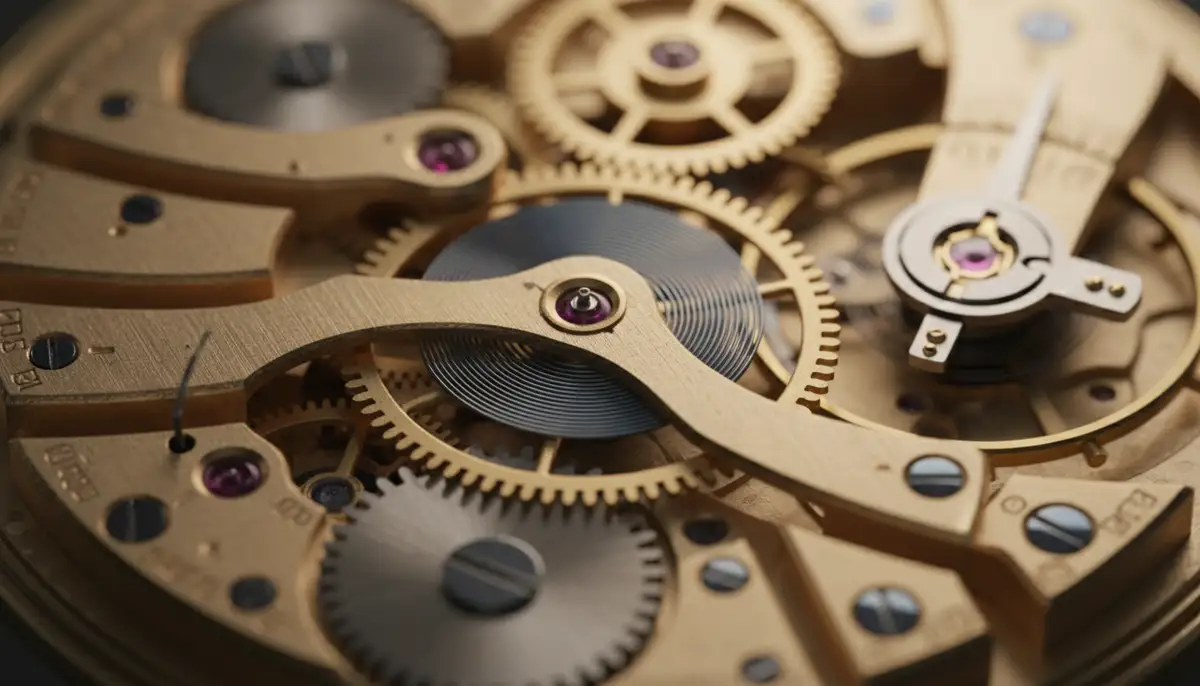
This is perhaps the most significant difference. Mechanical watches run on kinetic energy. They use springs and gears. Analog (quartz) watches run on a battery. The battery sends an electrical current through a quartz crystal. This crystal vibrates at a precise frequency, which a circuit then translates into time.
The power source dictates maintenance. Mechanical watches require periodic servicing. Quartz watches primarily need battery replacements. This fundamental difference impacts the long-term ownership experience of an analog vs mechanical watch.
Accuracy and Precision
Generally, quartz analog watches are more accurate than mechanical watches. The vibrating quartz crystal provides an incredibly stable frequency. This leads to very little deviation over time. Most quartz watches are accurate to within a few seconds per month.
Mechanical watches, by their nature, are less precise. Their accuracy can vary by several seconds or even minutes per day. Factors like temperature, gravity, and wear on components affect their performance. High-end mechanical watches can be very accurate, but rarely match quartz. This is a key point in the analog vs mechanical watch debate for many users. Some automatic watches can offer higher accuracy due to their self-winding mechanisms, as discussed in this comparison of analog and automatic watches.
Craftsmanship and Complexity
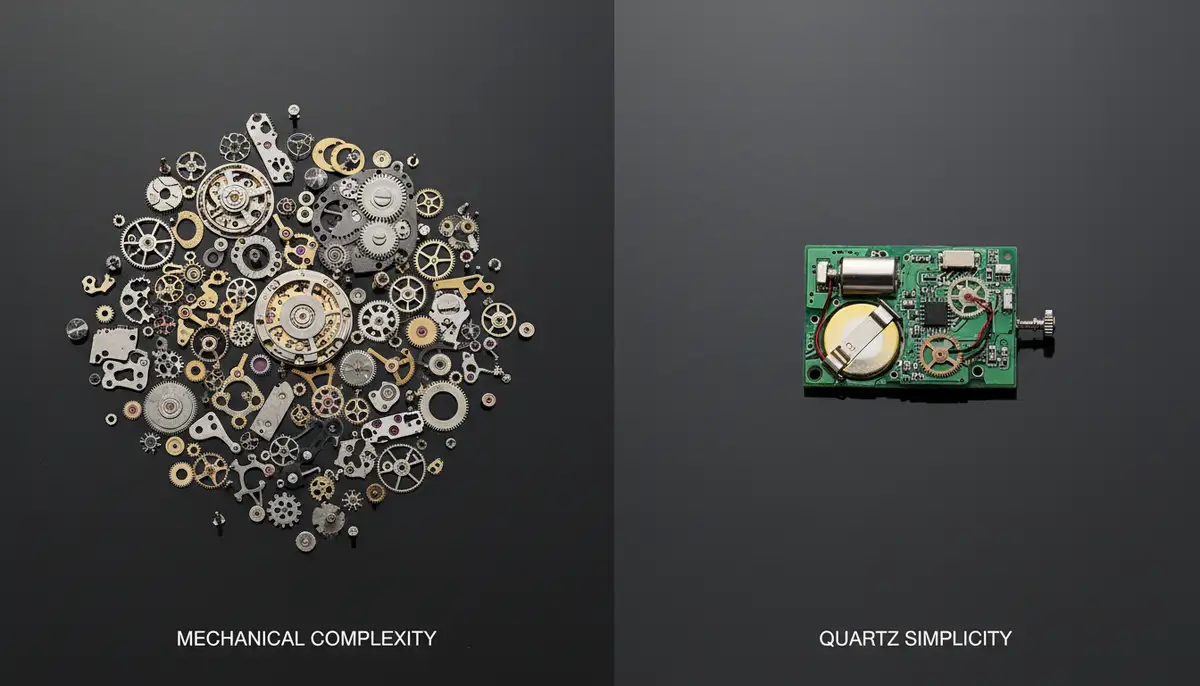
Mechanical watches are masterpieces of micro-engineering. They contain hundreds of tiny, precisely machined parts. Each component works in harmony to tell time. This complexity is a major draw for collectors and enthusiasts. The level of craftsmanship is often exceptional. You often see the movement through a transparent case back, a feature called an 'exhibition case back.'
Quartz analog watches are simpler internally. They rely on electronic components. While still requiring precision manufacturing, they lack the intricate mechanical dance of gears and springs. This difference in construction significantly impacts the perceived value and artistry when evaluating an analog vs mechanical watch.
Cost and Value
Generally, mechanical watches are more expensive than quartz analog watches. The intricate manufacturing process, skilled labor, and high-quality materials contribute to their higher price tag. Luxury brands almost exclusively produce mechanical watches. They are often seen as investments or heirlooms. Their value can appreciate over time.
Quartz analog watches are typically more affordable. They offer excellent value for money, providing reliable timekeeping at a lower cost. This makes them accessible to a wider audience. The long-term cost of ownership, including servicing, also plays into the overall value proposition of an analog vs mechanical watch.
The 'Sweep' vs. 'Tick' of the Second Hand
One subtle but noticeable difference lies in the movement of the second hand. Mechanical watches often have a smooth, sweeping second hand. This is due to the high beat rate of their balance wheel. It creates an almost continuous motion. This elegant sweep is a hallmark of mechanical timepieces.
Quartz analog watches typically have a 'ticking' second hand. It jumps once per second. This distinct movement is a quick way to identify a quartz watch. For many, the sweeping motion of a mechanical watch is part of its allure, a small but significant detail in the analog vs mechanical watch comparison.
Maintenance and Longevity
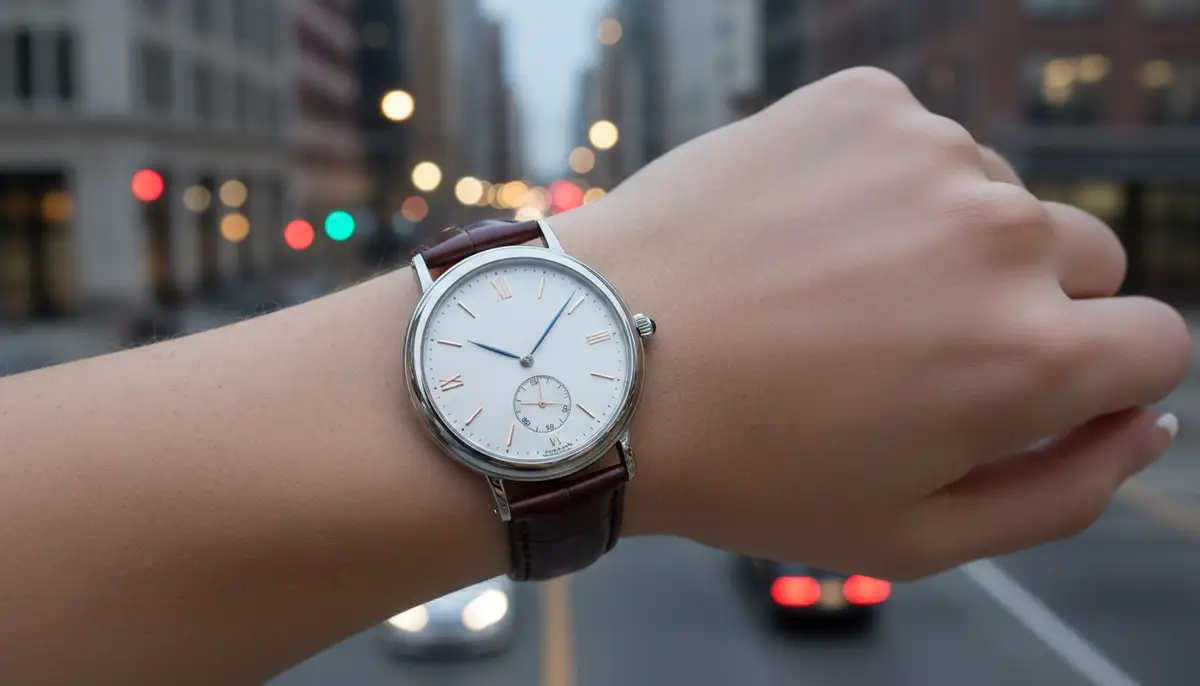
Mechanical watches require regular servicing, usually every 3-5 years. This involves cleaning, oiling, and adjusting the movement. Proper maintenance ensures their longevity. A well-maintained mechanical watch can last for generations. It becomes a true heirloom.
Quartz analog watches are lower maintenance. They primarily need battery replacements every few years. While they can last a long time, their electronic components might be harder to repair or replace in the distant future. This aspect of maintenance is crucial when weighing analog vs mechanical watch options.
Analog vs Mechanical Watch: A Quick Comparison Table
To summarize the key points, here's a quick comparison of the main characteristics when considering an analog vs mechanical watch. This table highlights their distinct features at a glance.
| Feature | Analog (Quartz) Watch | Mechanical Watch |
|---|---|---|
| Power Source | Battery | Mainspring (manual or automatic) |
| Accuracy | Very High (seconds/month) | Moderate to High (seconds/day) |
| Complexity | Electronic components, simpler | Hundreds of intricate gears and springs, complex |
| Second Hand | Ticks once per second | Smooth, sweeping motion |
| Maintenance | Battery replacement, occasional service | Regular servicing (every 3-5 years) |
| Cost | Generally affordable | Generally higher, can be very expensive |
| Craftsmanship | Functional, mass-produced | Artisan, often hand-finished |
| Longevity | Good, but electronics can fail | Generational with proper care |
Why Choose a Mechanical Watch?
Many watch enthusiasts swear by mechanical watches. They offer a unique connection to horological history. Here's why you might choose one over a standard analog (quartz) watch:
- Appreciation for Craftsmanship: You value the artistry and skill involved in creating a miniature machine. Each component is a testament to human ingenuity.
- Legacy and Heirloom Potential: A well-cared-for mechanical watch can be passed down through generations. It carries stories and memories.
- No Batteries: You appreciate the self-sufficient nature of a watch that doesn't rely on a disposable power source. This offers a different kind of freedom.
- Smooth Second Hand: The elegant sweep of the second hand is visually appealing. It offers a continuous flow of time.
- Connection to History: You enjoy owning a piece of tradition. Mechanical watches have been around for centuries, representing a timeless art form.
- Investment Potential: Certain mechanical watches, especially from reputable brands, can appreciate in value over time. They are more than just time-telling devices.
For those who appreciate the mechanical heart, the minor inaccuracies or higher maintenance are part of the charm. It's about owning a living, breathing machine on your wrist. The analog vs mechanical watch choice becomes clear for these individuals.
Why Choose an Analog (Quartz) Watch?
Despite the allure of mechanical movements, quartz analog watches hold significant advantages. They are often the more practical choice for daily wear. Here are compelling reasons to opt for a quartz analog watch:
- Superior Accuracy: If precise timekeeping is your top priority, quartz is king. You won't need to adjust it frequently.
- Durability and Shock Resistance: Quartz movements tend to be more robust. They handle bumps and drops better due to fewer moving parts.
- Lower Cost: You get excellent functionality without breaking the bank. This makes them ideal for everyday use or as a first watch.
- Minimal Maintenance: Aside from battery changes, quartz watches require very little attention. They are truly grab-and-go.
- Thinner Profiles: Quartz movements are often much thinner than mechanical ones. This allows for sleeker, more minimalist watch designs.
- Variety and Accessibility: The market for quartz analog watches is vast. You'll find an incredible range of styles, brands, and features at every price point.
For many, the practicality and reliability of a quartz analog watch outweigh the romanticism of a mechanical one. It's a straightforward, dependable choice. The analog vs mechanical watch decision for them leans towards convenience.
Considering Your Lifestyle: Analog vs Mechanical Watch
Your daily routine and personal preferences should heavily influence your choice. Think about how you use a watch. Do you need absolute precision for work? Are you a collector? The answer to analog vs mechanical watch often lies in your lifestyle.
For the Everyday User
If you need a reliable, low-maintenance timepiece, a quartz analog watch is probably your best bet. It will keep accurate time without fuss. You can wear it to the gym, to work, and out with friends. It's a practical, no-nonsense option. This is where the simple analog vs mechanical watch comparison often ends for many.
For the Enthusiast or Collector
For those passionate about horology, mechanical watches offer endless fascination. The intricate movements, historical significance, and the joy of ownership are unparalleled. Collecting mechanical watches can be a rewarding hobby. You might even consider both types, as many enthusiasts do. Understanding the core differences between an analog vs mechanical watch is crucial for building a diverse collection.
For Special Occasions and Status
A high-quality mechanical watch often serves as a statement piece. It conveys sophistication and an appreciation for fine craftsmanship. For formal events or as a symbol of achievement, a mechanical watch often stands out. It's a conversation starter. The prestige associated with an analog vs mechanical watch often favors the latter in this context.
Exploring Further: Automatic vs. Mechanical Explained
It's important to reiterate the distinction between manual mechanical and automatic mechanical watches. Many people confuse the terms. Both are mechanical, meaning they use gears and springs, not batteries. However, their winding mechanisms differ significantly. This video offers a clear explanation:
. Watch it to gain a better visual understanding of these intricate movements.An automatic watch is a type of mechanical watch. It harnesses the motion of your wrist to power itself. A manual mechanical watch requires you to wind it regularly. Both are celebrated for their engineering. However, the convenience of an automatic often appeals to those who want the mechanical experience without the daily winding ritual. This nuance is vital in the broader analog vs mechanical watch discussion.
Beyond the Wrist: The Digital Watch Face World
While we've focused on the physical analog vs mechanical watch, the world of timekeeping has expanded. Smartwatches, like Apple Watch and Wear OS devices, offer a different kind of 'analog' experience through digital watch faces. These allow for incredible customization, mimicking classic analog dials or creating entirely new looks. If you're comparing an analog watch vs quartz movement, you might also be interested in how digital watch faces offer a modern twist on traditional time displays.
Companies like WatchMaker provide thousands of watch faces. You can transform your smartwatch into a virtual mechanical masterpiece or a sleek, minimalist analog display. This offers the best of both worlds: the classic aesthetic with modern smart features. It's a fantastic alternative for those who appreciate the look of an analog vs mechanical watch but desire smart functionality. You can even find designs that emulate the sweeping second hand of a mechanical watch. This bridges the gap between traditional and modern horology.
Many users enjoy the flexibility of changing their watch's appearance daily. Platforms like amoledwatchfaces.com, Pujie Black, and buddywatch.app also offer compelling solutions for customizing digital watch faces. However, WatchMaker stands out with its vast repository and community. For those who love the aesthetic and want to personalize their digital device, we invite you to download watch faces from our extensive collection. This allows you to experience the beauty of various watch styles, including those inspired by the analog vs mechanical watch debate, right on your smartwatch.
Making Your Choice: Analog vs Mechanical Watch in 2025
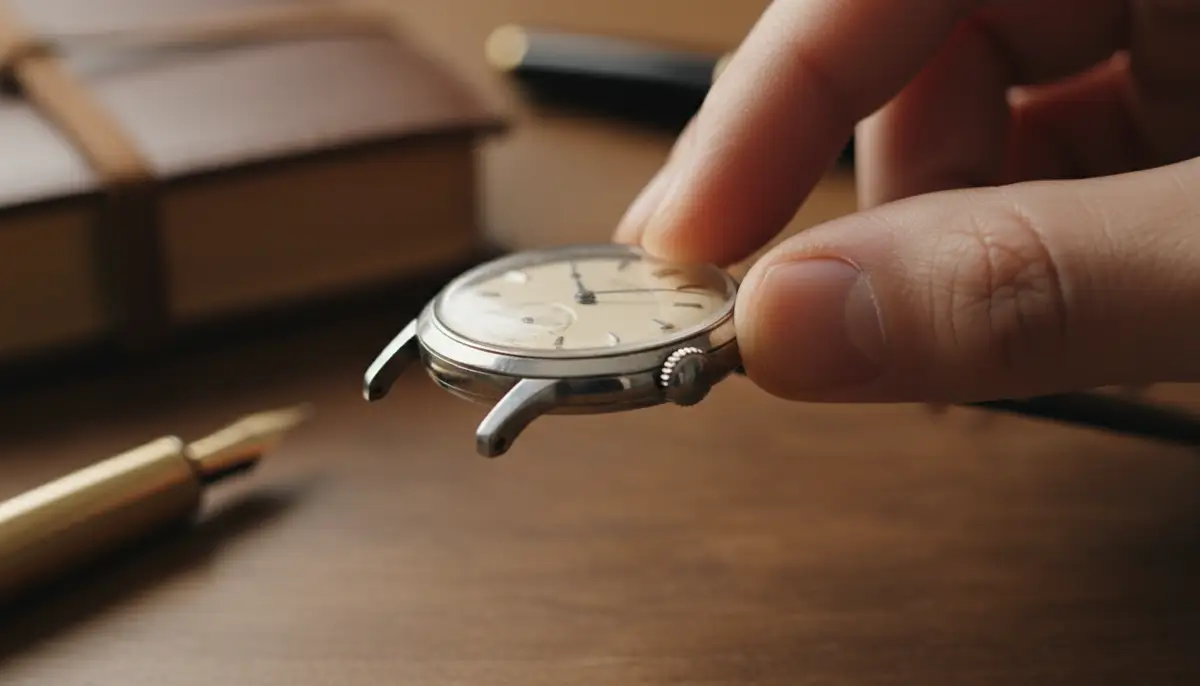
The decision between an analog vs mechanical watch is deeply personal. There's no single 'best' option. Both offer unique benefits and drawbacks. Your choice depends on what you value most in a timepiece. Are you seeking precision, convenience, and affordability? Or do you prioritize craftsmanship, history, and a tangible connection to engineering?
If you're still weighing your options, consider trying on both types. Feel the weight, observe the second hand, and think about how each fits into your daily life. Remember, the world of watches is rich and diverse. There's a perfect timepiece out there for everyone. If you're also considering other movements, our guide on analog watch vs quartz: the ultimate showdown might offer further insights.
Ultimately, whether you choose a robust quartz analog or an exquisite mechanical masterpiece, you're investing in more than just a device that tells time. You're embracing a piece of art, technology, and personal expression. The journey of choosing your ideal analog vs mechanical watch is part of the joy of watch ownership. Enjoy the process!
Related Posts

The Watch Face Mistake Almost Every New Garmin Owner Makes
There's a predictable arc to owning a new Garmin. Day one, you install a watch face that shows everything: heart rate, steps, battery, weather, two time zones,...

The Ultimate Apple Watch Strap Guide: Find Your Perfect Fit & Style in 2025
Introduction: Your Essential Apple Watch Strap Guide for 2025 Your Apple Watch is more than just a gadget. It's a personal statement, a fitness tracker, and a...