
 Pokemon Card Scanner
 Live Wallpapers Unlimited



WatchWatchLaNeigeScrimshaw

There was a time when a sailor did not ask, “What time is it?”
He asked, “What watch is it?”
At sea, the day had its own ancient rhythm.
The First Watch carried the ship into darkness.
The Middle Watch belonged to the small hours, when the ocean disappeared beyond the rail and the stars seemed close enough to steer by.
The Morning Watch watched the first light gather on the horizon.
Then came the Forenoon and Afternoon Watches, followed by the two short Dog Watches that broke the evening in two before the cycle began again.
Eight bells. Four hours. Another watch relieved.
For centuries, ships crossed oceans this way.
Not simply hour by hour, but watch by watch.
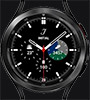
That idea became the inspiration for the Watch Watch.
At its outer edge is the familiar language of time.
Inside it, another clock emerges: the traditional watches of a ship at sea, arranged exactly where they belong within the twenty-four-hour day. Daylight gives way gradually to navy blue. Sector lines mark the moments when one watch ends and another begins. The Dog Watches divide the evening just as they did aboard generations of ships.
Look at it once and you can tell the time.
Look again and you can tell whose watch it would have been.
It is a watch face built around something older than the wristwatch itself: the endless rotation of people standing their turn while a ship moves through the sea.
Midnight becomes the Middle Watch.
Dawn becomes the Morning Watch.
Four in the afternoon begins the First Dog Watch.
And when eight o’clock arrives, the First Watch begins again.
A small world of naval time, turning quietly on the wrist.
The Watch Watch.
Because sometimes knowing the hour is only half the story.
Creado el 23 Aug 2026