




 Pokemon Card Scanner
 Live Wallpapers Unlimited

Mastering Precision: A Comprehensive Guide on How to Regulate Mechanical Watch for Optimal Accuracy in 2025
Your mechanical watch is a marvel of engineering. It keeps time through a complex dance of gears, springs, and levers. However, even the finest watches can lose or gain a few seconds each day. This drift is normal, but it can be frustrating. If you've ever wondered how to regulate mechanical watch to achieve near-perfect accuracy, you're in the right place. This comprehensive guide will walk you through the process, empowering you to fine-tune your timepiece at home.
Why Do Mechanical Watches Need Regulation?
Mechanical watches are not like quartz watches. They rely on a tiny spring, called the hairspring, and a balance wheel to oscillate at a precise rate. Many factors can influence this rate. These include temperature changes, gravity, magnetism, and even the lubrication inside the movement. Over time, these influences can cause your watch to run fast or slow. This means it needs adjustment. Understanding these factors is the first step in learning how to regulate mechanical watch effectively.
Think of it like tuning a musical instrument. A guitar needs regular tuning to sound right. Similarly, a mechanical watch needs regulation to keep accurate time. Even small changes can affect its performance. Therefore, periodic adjustment is crucial for optimal timekeeping.
When Should You Regulate Your Mechanical Watch?
Not every watch needs constant regulation. However, there are clear signs it's time to learn how to regulate mechanical watch. You should consider regulation if:
- Your watch consistently gains or loses more than 10-15 seconds per day.
- You've noticed a sudden, significant change in its accuracy.
- The watch has been exposed to a strong magnetic field.
- It's a new watch, and you want to optimize its factory settings.
- You've recently had the watch serviced or repaired.
For most enthusiasts, regulating a watch every few years is sufficient. However, if you're a stickler for precision, more frequent checks might be appealing. Remember, regulating is different from servicing. Servicing involves cleaning, lubricating, and replacing worn parts. Regulation is about adjusting the timing.
Essential Tools for Regulating a Mechanical Watch
Before you dive into the delicate work of how to regulate mechanical watch, you need the right equipment. Precision is key, and having the correct tools makes the process much safer and more effective. As experts at Gnomonwatches point out, a few specialized items are indispensable. Here’s what you’ll need:
- Case Back Opener: This tool allows you to safely remove the watch's back cover without scratching it. There are different types for screw-down, snap-on, and bayonet case backs.
- Precision Screwdrivers: You'll need very small, high-quality screwdrivers for any internal adjustments or to remove movement clamps.
- Non-Magnetic Tweezers/Pointers: These are crucial for making minute adjustments to the regulator arm. Magnetism is the enemy of mechanical watches.
- Loupe or Magnifying Glass: A jeweler's loupe (10x or 15x magnification) is essential for seeing the tiny components of the movement clearly.
- Dust Blower: To remove any dust or debris that might enter the watch once the case back is open.
- Finger Cots or Gloves: To prevent transferring oils and dirt from your skin to the delicate movement.
- Timegrapher: This is the most important tool. A timegrapher measures your watch's accuracy, beat error, and amplitude in various positions. It provides real-time feedback on your adjustments.
- Demagnetizer: Often overlooked, magnetism can severely affect a watch's accuracy. A demagnetizer ensures your watch is free from magnetic interference before and after regulation.
Understanding the Heart of Your Watch: The Balance Wheel and Regulator
Before you begin to regulate mechanical watch, you must understand its core components. The balance wheel and hairspring assembly are the heart of your watch. They control the pace of timekeeping. The hairspring is a tiny, delicate coil that makes the balance wheel oscillate back and forth. This oscillation rate determines how fast or slow your watch runs.
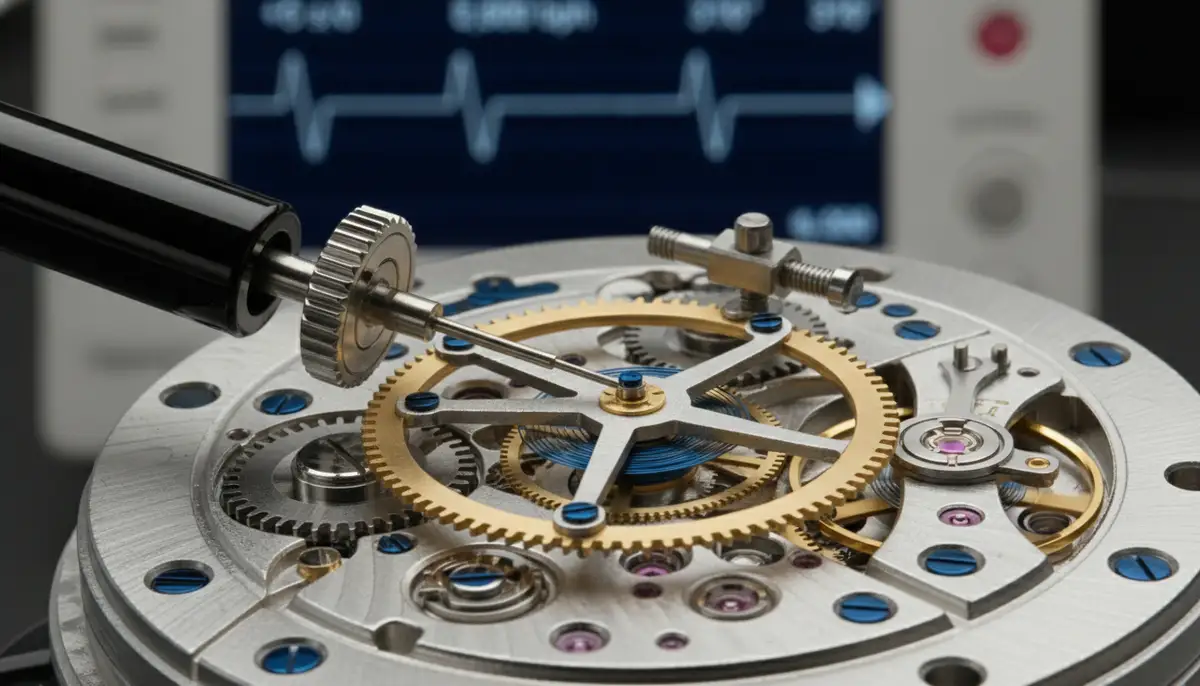
On top of the balance wheel, you'll find two levers. As detailed by DIY Watch Club, one lever is attached to the end of the hairspring. This is the mobile stud carrier. The other, larger lever is the regulator arm. Moving this arm changes the effective length of the hairspring. A shorter hairspring makes the watch run faster. A longer hairspring makes it run slower. This is the primary mechanism you will adjust when you regulate mechanical watch.
The Timegrapher: Your Indispensable Assistant
A timegrapher is not just a fancy gadget; it's an essential tool for precise regulation. It listens to the 'beat' of your watch and displays vital information. This information includes the daily rate (how many seconds fast or slow), beat error, and amplitude. These readings tell you exactly what adjustments are needed. Without a timegrapher, regulating a watch is largely guesswork.
Here’s a quick breakdown of what the timegrapher readings mean:
- Rate (s/d): This shows how many seconds your watch gains (+) or loses (-) per day. Your goal is to get this as close to 0 s/d as possible.
- Amplitude (degrees): This is the rotational angle of the balance wheel's swing. A healthy amplitude for a fully wound watch is typically between 270° and 310° in horizontal positions. Lower amplitude can indicate a need for servicing.
- Beat Error (ms): This measures the symmetry of the balance wheel's swing. Ideally, it should be below 0.5 ms, with 0.0 ms being perfect. High beat error suggests an imbalance in the escapement.
To get a better visual understanding of how this incredible device works and how it aids in the precise art of how to regulate mechanical watch, watch this excellent tutorial:
.Step-by-Step Guide: How to Regulate Mechanical Watch
Now, let's get to the practical steps of how to regulate mechanical watch. Take your time, work in a clean, well-lit area, and be patient. Precision is more important than speed here.
Step 1: Prepare Your Workspace and Watch
Set up your clean, dust-free workspace. Lay out all your tools. Ensure your hands are clean. Consider wearing finger cots or gloves to avoid leaving fingerprints or oils on the movement. Fully wind your watch. A fully wound mainspring provides the most consistent power to the movement, ensuring accurate readings on the timegrapher.
Step 2: Open the Case Back
Carefully open the watch's case back using the appropriate tool. For screw-down backs, use a case back opener with adjustable pins. For snap-on backs, use a case knife. Always work slowly to avoid scratching the case or slipping. Once open, place the case back and any gaskets in a safe, clean spot.
Step 3: Demagnetize Your Watch
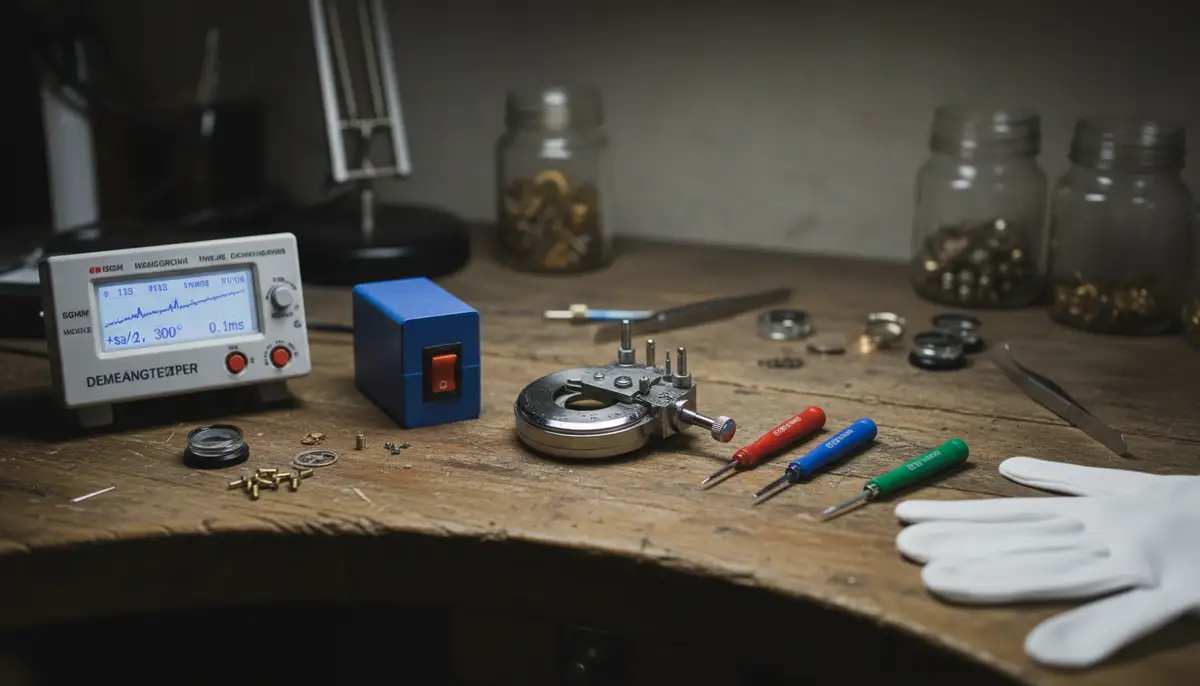
Before any adjustments, demagnetize your watch. Place the watch on the demagnetizer. Follow the instructions for your specific device. Usually, this involves pressing a button and slowly lifting the watch away. Magnetism is a common culprit for accuracy issues. Addressing it first can sometimes solve the problem without further regulation. This is a crucial step when learning how to regulate mechanical watch.
Step 4: Place the Watch on the Timegrapher
Carefully place your open watch on the timegrapher's microphone. Ensure good contact so the machine can pick up the beats clearly. The timegrapher will immediately start displaying readings. Let it run for at least 30-60 seconds to get stable readings for rate, amplitude, and beat error. Note these down.
Step 5: Locate the Regulator Arm
Using your loupe, carefully examine the movement. Locate the balance wheel and the hairspring. You will see two small levers near the hairspring. One is fixed (the stud carrier), and the other is movable (the regulator arm). The regulator arm is the one you will adjust. It often has a '+' and '-' marking nearby. This indicates which direction speeds up or slows down the watch.
Step 6: Make Micro-Adjustments
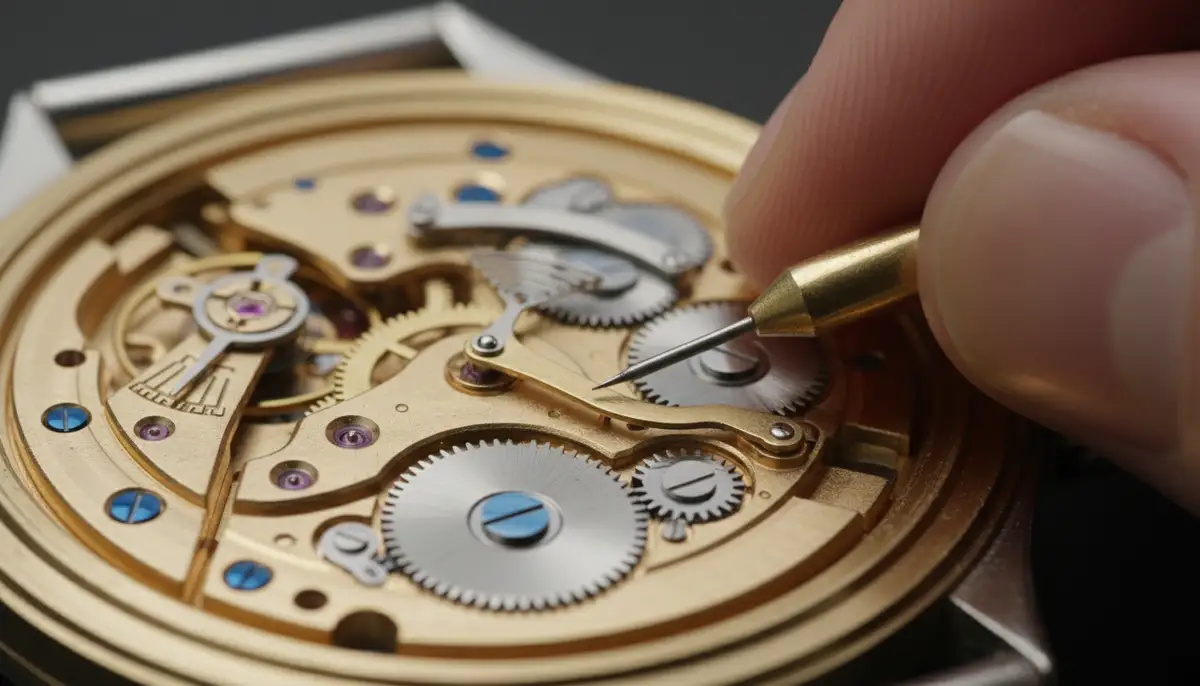
This is the most delicate part of how to regulate mechanical watch. Use a non-magnetic screwdriver or a fine, pointed tool. Gently nudge the regulator arm in the desired direction. Move it towards '+' to speed up the watch (if it's running slow). Move it towards '-' to slow down the watch (if it's running fast). The key here is micro-adjustments. Even the smallest movement can make a significant difference. As iFixit advises, use a non-magnetic tool to gently move the arm left or right. Make a tiny adjustment, then let the timegrapher settle for 15-30 seconds to read the new rate.
Step 7: Test in Multiple Positions
A watch's accuracy can vary depending on its position. After adjusting the rate in one position (e.g., dial up), test it in several others. Common positions include dial up, dial down, crown up, crown down, crown left, and crown right. Note the readings for each position. Your goal is to find a compromise that results in the best average daily rate across all common wearing positions. This is an advanced technique for how to regulate mechanical watch for truly optimal performance.
| Position | Desired Rate (s/d) | Amplitude (degrees) | Beat Error (ms) |
|---|---|---|---|
| Dial Up | 0 to +5 | 270-310 | <0.5 |
| Dial Down | 0 to +5 | 270-310 | <0.5 |
| Crown Up | -5 to +10 | 250-290 | <0.8 |
| Crown Down | -5 to +10 | 250-290 | <0.8 |
Step 8: Re-check and Refine
Repeat steps 6 and 7 until you are satisfied with the average daily rate. It takes patience and small, iterative adjustments. Don't expect perfection on your first try. The more you practice how to regulate mechanical watch, the more skilled you will become.
Step 9: Close the Case Back and Monitor
Once satisfied, carefully replace the case back and tighten it securely. Wear your watch as you normally would. Monitor its real-world accuracy over several days or a week. Compare it against a reliable time source. This final check confirms the success of your regulation efforts. You now know how to regulate mechanical watch effectively.
Common Pitfalls and Troubleshooting When You Regulate Mechanical Watch
Even with the right tools and knowledge, challenges can arise. Here are some common issues and how to address them:
- Over-adjusting: Making too large an adjustment. Always make tiny, incremental changes.
- Magnetism: If your watch suddenly becomes very inaccurate, it might be magnetized. Use your demagnetizer again. Avoid placing watches near speakers, phones, or laptops.
- Dust/Debris: A tiny speck of dust can stop a movement. Work in a clean environment and use a dust blower.
- Beat Error Issues: If the beat error is consistently high (above 1.0 ms), it indicates an issue with the hairspring's position relative to the balance staff. This is a more advanced adjustment, often requiring moving the stud carrier, and might be best left to a professional.
- Low Amplitude: If the amplitude is consistently below 220-250 degrees, it suggests a lack of power or friction in the movement. This usually means the watch needs a full service, not just regulation.
If you encounter persistent problems, it might be time to seek professional help. A skilled watchmaker can diagnose deeper issues. They have specialized tools and expertise. Knowing when to call in a professional is also part of mastering how to regulate mechanical watch.
Beyond Regulation: Maintaining Your Watch's Accuracy
Regulation is one aspect of watch care. However, overall maintenance plays a huge role in consistent accuracy. Here are some tips:
- Regular Servicing: Mechanical watches need a full service every 3-5 years. This involves cleaning, oiling, and replacing worn parts.
- Avoid Shocks: Hard impacts can damage delicate movement components, affecting accuracy.
- Keep it Demagnetized: Periodically check your watch for magnetism. Many phone apps can detect magnetic fields.
- Proper Storage: Store your watch in a dry, stable environment, away from extreme temperatures and magnetic sources.
- Winding Habits: If it's a manual wind, wind it at the same time each day. For automatics, wear it regularly or use a watch winder.
Understanding these practices will help you keep your watch running smoothly. It complements your knowledge of how to regulate mechanical watch for long-term enjoyment. You might also want to explore how to set mechanical watch properly for daily use, or even learn expert insights on how to set a chronograph watch if you own one of those complex timepieces.
Customizing Your Watch Experience: Beyond the Movement
While regulating the movement focuses on internal precision, the external appearance of your watch is also key to personal enjoyment. Many watch enthusiasts love to customize their timepieces. This often includes changing straps or even the watch face itself. For those who enjoy the digital side of horology, customizing watch faces on smartwatches offers a similar level of personalization. Companies like WatchMaker provide a vast repository of thousands of unique watch faces for both Apple Watch and WearOS devices. This allows you to match your watch's look to your mood or style, just as you fine-tune its movement for accuracy.
If you're looking for new ways to personalize your digital timepiece, consider exploring options from platforms like buddywatch.app, Pujie Black, or watchfacely.com. These platforms offer diverse designs and customization features. Just as you master how to regulate mechanical watch, you can also master the art of digital watch face customization. You can easily download watch faces to refresh your smartwatch's aesthetic.
Conclusion: The Rewarding Journey of How to Regulate Mechanical Watch

Learning how to regulate mechanical watch is a rewarding skill. It connects you more deeply with the intricate mechanics of your timepiece. It requires patience, precision, and the right tools. However, the satisfaction of seeing your watch keep near-perfect time is truly unmatched. By following the steps outlined in this guide, you can take control of your watch's accuracy. You can ensure it serves you well for years to come. Embrace the journey of horological mastery. Enjoy the precision of your newly regulated mechanical watch.
Related Posts

The Watch Face Mistake Almost Every New Garmin Owner Makes
There's a predictable arc to owning a new Garmin. Day one, you install a watch face that shows everything: heart rate, steps, battery, weather, two time zones,...

The Ultimate Apple Watch Strap Guide: Find Your Perfect Fit & Style in 2025
Introduction: Your Essential Apple Watch Strap Guide for 2025 Your Apple Watch is more than just a gadget. It's a personal statement, a fitness tracker, and a...