




 Pokemon Card Scanner
 Live Wallpapers Unlimited
Unlocking Time: How Does Digital Watch Work in 2025?
Digital watches are everywhere in 2025. From basic time-tellers to advanced smartwatches, they grace wrists globally. They offer convenience, precision, and a host of features. But have you ever stopped to think about how does digital watch work? It's more than just a battery and a screen. These devices pack incredible engineering into a tiny package. Understanding their inner workings helps you appreciate this everyday technology. Let's explore the fascinating world inside your digital timepiece.
The Core Components: How Does Digital Watch Work at its Heart?
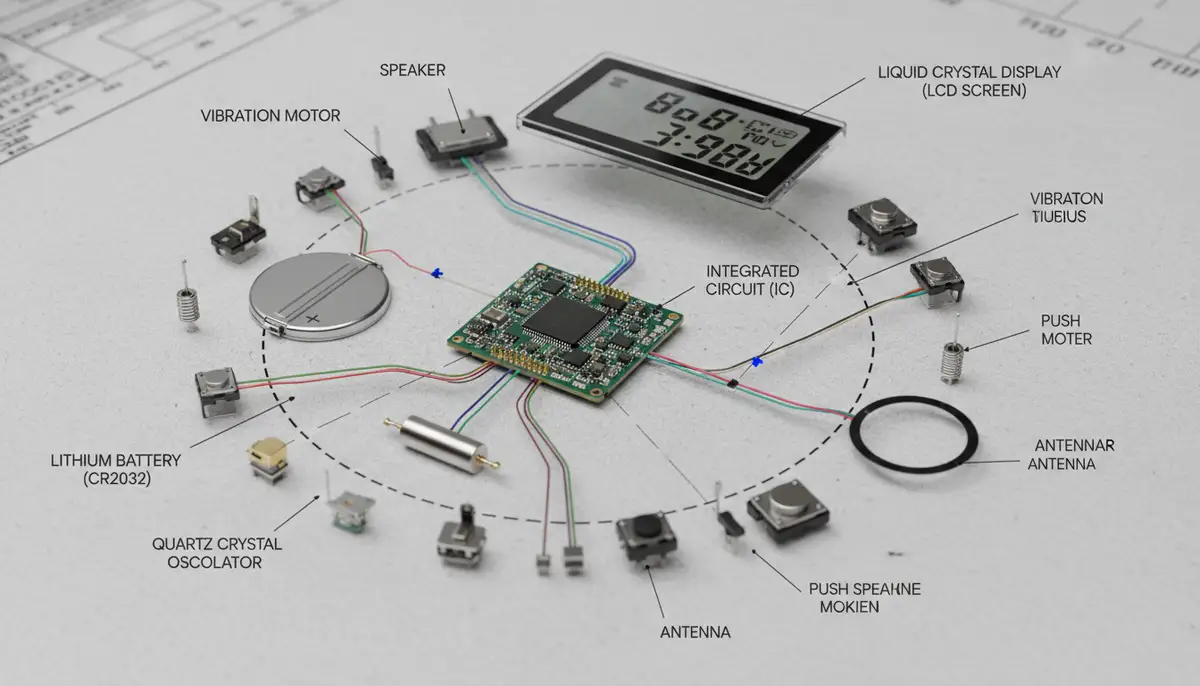
At its core, a digital watch is a miniature computer. It relies on several key components working together seamlessly. These parts ensure accurate timekeeping and power all its functions. You might be surprised by the ingenuity involved. Each component plays a vital role in answering the question: how does digital watch work?
- Power Source (Battery): Provides the energy for all operations.
- Time Base (Quartz Crystal Oscillator): Generates precise, regular electrical pulses.
- Integrated Circuit (IC) / Microcontroller: The 'brain' that counts pulses and processes data.
- Display: Shows the time and other information (typically LCD or LED).
Powering Your Timepiece: The Battery
Every digital watch needs power. This power comes from a small battery. Most modern digital watches use coin-cell lithium batteries. These batteries are compact and offer a long lifespan. Some advanced models even feature rechargeable batteries or solar charging. The battery supplies constant energy to the quartz crystal and the integrated circuit. Without it, your watch would simply be a decorative bracelet.
The Unsung Hero: The Quartz Crystal Oscillator
This is arguably the most critical part for accuracy. A tiny piece of quartz crystal sits inside your watch. When electricity passes through it, the quartz vibrates at an incredibly precise frequency. This phenomenon is called the piezoelectric effect. Typically, these crystals vibrate at 32,768 times per second. This consistent vibration creates a stable time base. It’s like a tiny, perfectly regular pendulum. This precise oscillation is fundamental to how does digital watch work.
The Brains Behind the Operation: The Integrated Circuit (IC)
The integrated circuit, or IC, is the true brain of your digital watch. It receives the 32,768 pulses per second from the quartz crystal. The IC then divides these pulses down to a more manageable frequency. Specifically, it divides them until it gets one pulse per second. This one pulse per second is what the watch uses to keep track of time. The IC also stores the time, date, and any other settings. It controls the display, sending signals to show the correct numbers. This tiny chip performs complex calculations instantly. It is central to how does digital watch work and display information.
The IC is essentially a miniature computer. It processes all the input from buttons and manages all outputs to the display. This is how a digital clock displays the time digitally, using numerals or other symbols, unlike an analog clock which uses hands. For a deeper dive into the fundamental differences, you can find more information about digital clocks on Wikipedia.
Displaying the Time: LCD vs. LED
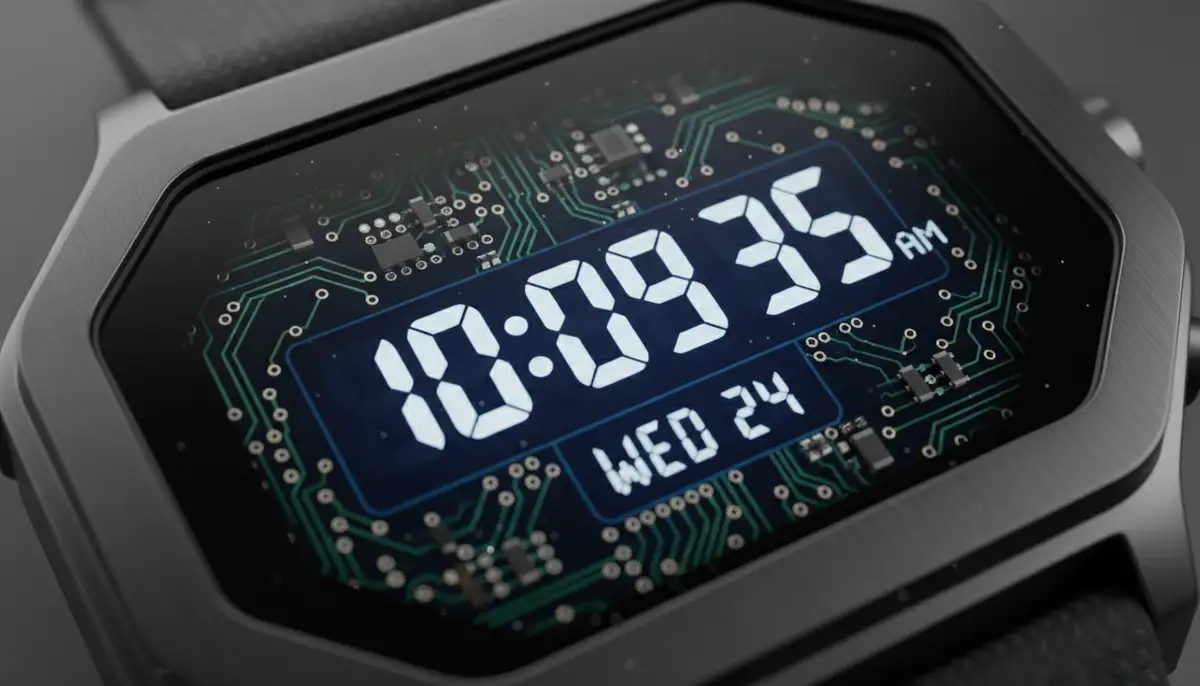
Once the IC processes the time, it needs a way to show it to you. Digital watches primarily use two types of displays: Liquid Crystal Displays (LCDs) and Light Emitting Diode (LED) displays. Both have unique characteristics and contribute to how does digital watch work visually.
### Liquid Crystal Displays (LCDs)
LCDs are the most common type of display in digital watches today. They work by using liquid crystals that can block or transmit light. When an electrical current is applied, the crystals align. This alignment changes how light passes through them. A backlight often illuminates the display, making it visible in low light. LCDs are known for being energy-efficient. They consume very little power, which extends battery life. This is a major reason for their widespread use.
### Light Emitting Diode (LED) Displays
LED displays were popular in early digital watches. They consist of many tiny light-emitting diodes. These diodes light up to form numbers. LED displays are bright and easy to read. However, they consume much more power than LCDs. This means early LED watches often required you to press a button to see the time, saving battery. The Pulsar was the first watch to display time in a digital format, using light-emitting diodes (LEDs), marking a significant milestone in watch technology. You can read more about the Pulsar's revolution in display technology.
| Feature | LCD Display | LED Display |
|---|---|---|
| Power Consumption | Very Low | High |
| Visibility | Good in ambient light, requires backlight in dark | Excellent in dark, can be washed out in bright sun |
| Battery Life | Longer | Shorter (often required button press) |
| Common Use | Most modern digital watches | Early digital watches, some smartwatches (OLED variants) |
From Pulses to Pixels: The Digital Watch Workflow
Now that we know the components, let's put it all together. Understanding the workflow helps clarify how does digital watch work from start to finish. It's a continuous, cyclical process happening many times per second.
- 1. Battery powers the quartz crystal and IC.
- 2. Quartz crystal oscillates at 32,768 Hz, sending pulses to the IC.
- 3. The IC divides these pulses, counting one pulse per second.
- 4. The IC updates its internal clock based on these seconds, then minutes, then hours.
- 5. The IC sends electrical signals to the display segments.
- 6. The display (LCD or LED) illuminates or changes to show the correct time and date.
This entire process happens incredibly fast. It ensures that the time displayed is always accurate. If you ever need to adjust your watch, knowing this sequence can help. For instance, if you own an Armitron, you might find our comprehensive guide on how to set an Armitron watch very useful.
Beyond Telling Time: Advanced Features and How Does Digital Watch Work with Them?
Modern digital watches offer much more than just the time. They include chronographs, alarms, timers, and even smart functionalities. Each of these features uses the same core principles. However, they add more complex programming to the integrated circuit. This expands the answer to how does digital watch work in today's world.
Chronographs and Timers
A chronograph is essentially a stopwatch function. The IC has additional programming for this. When you activate the chronograph, the IC starts counting pulses from the quartz crystal independently. It tracks elapsed time, split times, and lap times. Timers work similarly but count down from a preset duration. These functions demonstrate the IC's ability to run multiple processes. They add significant utility to your watch.
Alarms and Reminders
Alarms are another common feature. You set a specific time, and the IC stores it. When the internal clock matches the alarm time, the IC triggers a small speaker or a vibration motor. This alerts you. Some watches offer multiple alarms or even daily reminders. This functionality relies on the IC's ability to compare stored values with the current time. It shows the versatility of the digital watch's brain.
Backlights and Illumination
To see the time in the dark, many digital watches include a backlight. This is usually a small LED or an electroluminescent panel. When you press a button, the IC sends power to the backlight. It illuminates the display temporarily. This feature is crucial for visibility in low-light conditions. It ensures you can always read your watch, day or night.
Smartwatch Integration
The evolution of digital watches has led to smartwatches. These devices integrate even more advanced technology. They include sensors for heart rate, GPS, and accelerometers. They also have Bluetooth or Wi-Fi connectivity. The IC in a smartwatch is much more powerful, often a full-fledged microprocessor. It runs operating systems and applications. This allows for notifications, fitness tracking, and even mobile payments. Smartwatches truly push the boundaries of how does digital watch work. They are wearable computers on your wrist.
For those who love customizing their smartwatches, platforms like WatchMaker offer incredible possibilities. You can find thousands of unique download watch faces for both Apple Watch and Wear OS devices. Other popular platforms include watchfacely.com, amoledwatchfaces.com, and solutions like Pujie Black, all providing a rich ecosystem for personalization. These platforms highlight the vibrant community and innovation in digital watch customization.
Setting Your Digital Watch: A Practical Guide
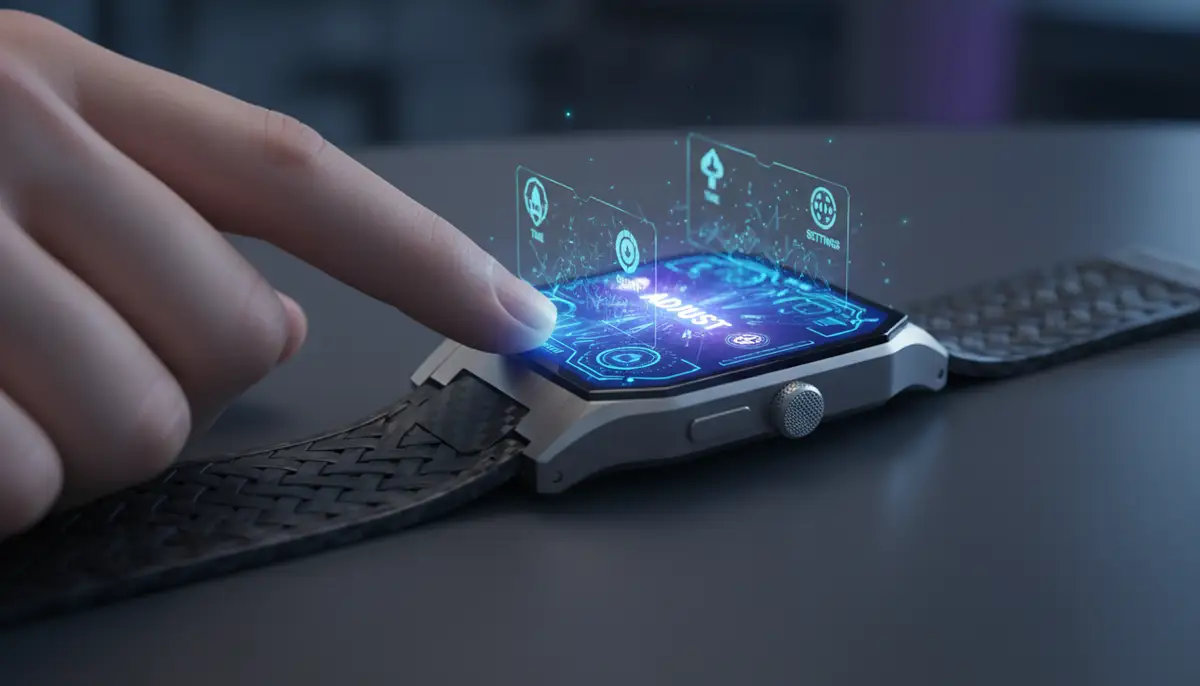
Even with advanced features, setting the time correctly is fundamental. Knowing how does digital watch work internally helps, but practical steps are key. Most digital watches follow a similar pattern for setting. You typically use a 'Mode' button and adjustment buttons.
To set most digital watches, you press the 'Mode' button or hold it down until the time flashes. This indicates you are in the time-setting mode. The minutes or hours will blink, ready for adjustment. You then use other buttons, often labeled 'Adjust' or 'Set', to change the values. Pressing 'Mode' again usually cycles through different settings like hours, minutes, date, and alarm. For a detailed guide on these steps, you can refer to how to set a digital watch on wikiHow.
Sometimes, setting the date can be tricky, especially with different month lengths. If you have a Casio watch, our guide on mastering how to change the date on your Casio watch provides all the details you need. It covers common models and ensures your watch is always up-to-date. Understanding the basic principles of how does digital watch work makes these adjustments easier. You can also watch this helpful video to visualize the differences:
Maintenance and Longevity: Keeping Your Digital Watch Ticking (Digitally)
To ensure your digital watch lasts, proper care is essential. While they don't have moving parts like mechanical watches, they still need attention. Understanding how does digital watch work helps you care for its delicate electronics. Here are some tips:
- Battery Replacement: Replace batteries promptly when they run low to avoid leakage.
- Water Resistance: Check your watch's water resistance rating before exposing it to water. Don't press buttons underwater unless specified.
- Cleaning: Wipe your watch regularly with a soft, damp cloth to remove dirt and grime.
- Avoid Extreme Temperatures: Extreme heat or cold can affect the battery and display.
- Protect from Shocks: While durable, avoid dropping your watch or subjecting it to hard impacts.
- Software Updates (for Smartwatches): Keep your smartwatch's software updated for best performance and security.
Following these simple maintenance steps will extend the life of your digital watch. It will continue to serve you reliably for years to come. This care ensures the intricate system of how does digital watch work remains intact.
The Future of Digital Timekeeping
The journey of the digital watch is far from over. We can expect even more innovation in the coming years. Imagine watches with holographic displays or advanced AI assistants. Future digital watches might integrate seamlessly with our health, smart homes, and daily routines. Miniaturization will continue, allowing for more power and features in smaller packages. Battery technology will improve, offering longer life and faster charging. The core principles of how does digital watch work will remain, but the applications will grow exponentially.
New materials will make watches more durable and comfortable. We will see more personalized experiences, too. The line between a simple digital watch and a full-fledged wearable computer will blur further. This evolution promises even more exciting ways to interact with time and information on our wrists. The question of how does digital watch work will only become more complex and fascinating.

Conclusion: The Enduring Appeal of Digital Watches
From a simple quartz crystal oscillating thousands of times per second to complex integrated circuits managing multiple functions, the technology behind digital watches is truly impressive. We've explored how does digital watch work, from its power source to its display. We've also touched on the advanced features that make modern digital watches indispensable. They are more than just devices that tell time. They are miniature marvels of engineering. They continue to evolve at a rapid pace. So, the next time you glance at your wrist, take a moment to appreciate the intricate dance of electronics making it all possible. Your digital watch is a testament to human ingenuity, constantly pushing the boundaries of what's possible in a small, wearable form factor.
Related Posts

The Watch Face Mistake Almost Every New Garmin Owner Makes
There's a predictable arc to owning a new Garmin. Day one, you install a watch face that shows everything: heart rate, steps, battery, weather, two time zones,...

The Ultimate Apple Watch Strap Guide: Find Your Perfect Fit & Style in 2025
Introduction: Your Essential Apple Watch Strap Guide for 2025 Your Apple Watch is more than just a gadget. It's a personal statement, a fitness tracker, and a...