




 Pokemon Card Scanner
 Live Wallpapers Unlimited
Unveiling the Magic: How Does an Automatic Watch Work?
The Enduring Fascination: How Does an Automatic Watch Work?
Imagine a timepiece that never needs a battery. It draws power from your everyday movements. This is the magic of an automatic watch. Many people wonder, how does an automatic watch work? It's a question that delves into centuries of intricate mechanical engineering. These self-winding marvels are powered by kinetic energy, the energy of motion. Your wrist's natural sway keeps them ticking. At WatchMaker, we appreciate both the intricate mechanics of traditional watches and the innovative display options of modern smartwatches. Understanding the core mechanism of these classic timepieces helps you appreciate their enduring appeal.
Unlike quartz watches, which rely on a battery and a vibrating crystal, automatic watches are purely mechanical. They represent a pinnacle of traditional watchmaking. This guide will take you on a deep dive into the fascinating world of automatic movements. You will discover the individual components and how they collaborate. We will explore the ingenious design that allows a watch to wind itself. By the end, you'll have a clear understanding of how does an automatic watch work.
The Core Principle: Kinetic Energy and Self-Winding
At its heart, an automatic watch operates on a simple yet brilliant principle. It converts your body's motion into stored energy. This process is known as self-winding. The key component responsible for this transformation is the oscillating weight, or rotor. This half-moon shaped piece is typically made of a heavy metal. It freely rotates 360 degrees with every movement of your wrist. This constant motion is what drives the watch. It eliminates the need for manual winding or battery replacements.
This ingenious system means that as long as you wear your watch regularly, it will continue to run. The kinetic energy from your movements winds the mainspring. This spring then powers the entire mechanism. To learn more about this fascinating technology, you can explore a comprehensive overview of automatic watches on Wikipedia. This constant energy replenishment is a major reason for the popularity of automatic timepieces. It's a testament to clever engineering.
A Brief History of Self-Winding Watches
The concept of a self-winding mechanism is not new. It dates back to the late 18th century. Abraham-Louis Perrelet is often credited with inventing the first automatic mechanism for pocket watches around 1770. His design used an oscillating weight. It moved with the wearer's steps to wind the mainspring. However, these early designs were not widely adopted. They were complex and often unreliable.
The modern automatic wristwatch truly emerged in the early 20th century. John Harwood patented the first practical self-winding wristwatch in 1923. His design used a bumper winding system. It had a weight that swung through a limited arc. Rolex later refined this concept in 1931 with their 'Perpetual' rotor system. This allowed the weight to rotate a full 360 degrees. This innovation revolutionized watchmaking. It laid the foundation for how does an automatic watch work today. It made automatic watches reliable and popular.
Key Components: Unpacking the Automatic Movement
Understanding how does an automatic watch work requires a look inside. The automatic movement is a miniature city of gears, springs, and levers. Each component plays a crucial role. They all work in harmony to keep time accurately. Let's break down the main parts you'd find in a typical automatic watch movement. This will help you appreciate the complexity and precision involved.
The Oscillating Weight (Rotor)
This is the most visible part of an automatic movement, especially with a display case back. The rotor is typically a semi-circular piece of metal. It's often made from heavy materials like tungsten or gold. Its weight and free rotation allow it to capture kinetic energy. As your wrist moves, the rotor swings. This movement is then translated into winding power. It's the primary engine of the automatic watch.
The rotor is mounted on a central pivot. It spins around this pivot with minimal friction. This efficient design ensures that even small movements contribute to winding the mainspring. Different manufacturers might use variations in rotor design. Some are skeletonized for aesthetics. Others are designed for maximum winding efficiency. This component is central to how does an automatic watch work.
The Gear Train
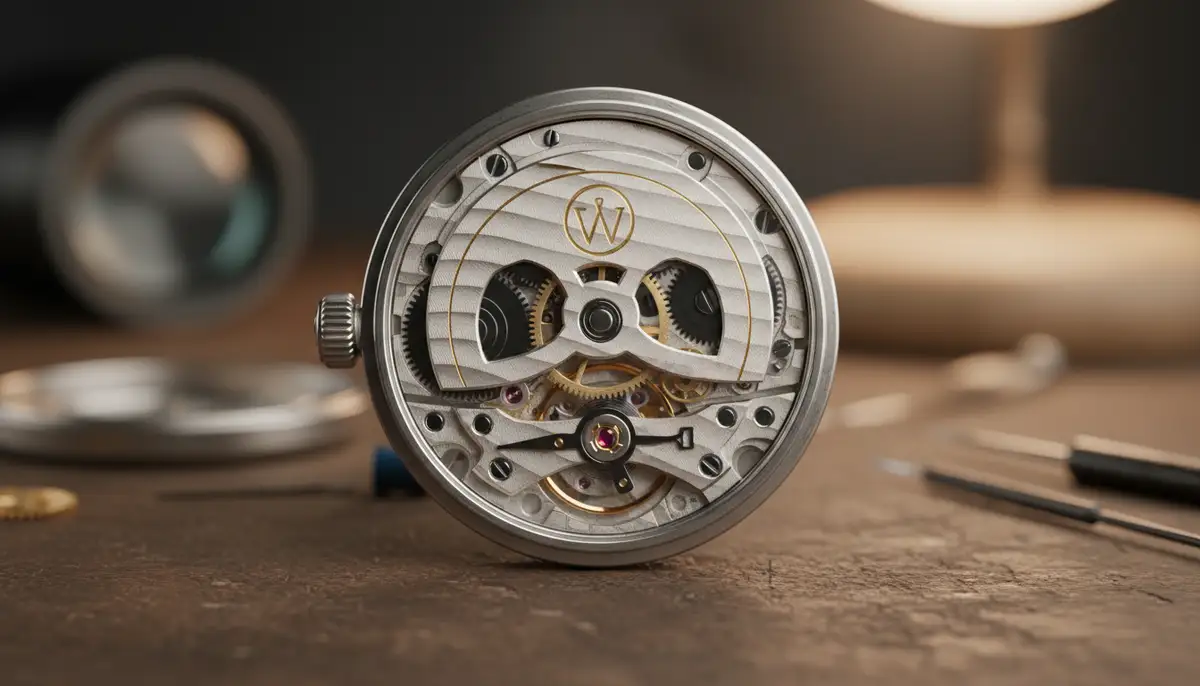
The gear train is a series of interconnected gears. It transmits power from the mainspring to the escapement. It also drives the hands on the watch face. Each gear has a specific number of teeth. They are precisely machined to mesh perfectly. This ensures smooth and consistent power transfer. The gear train also reduces the speed of the power. It allows the escapement to regulate time accurately.
The gear train starts with the mainspring barrel. It then moves through various wheels. These include the center wheel, third wheel, and fourth wheel. Each wheel turns at a different rate. This precisely controlled reduction in speed is vital for timekeeping. It's a fundamental part of the watch's mechanical brain. Without it, the watch would run wild.
The Mainspring and Barrel
The mainspring is the power source of the watch. It's a long, coiled strip of metal. It sits inside a cylindrical housing called the barrel. When the watch is wound (either manually or by the rotor), the mainspring tightens. This stores potential energy. As it slowly unwinds, it releases this energy. This drives the gear train. The barrel has teeth on its outer edge. These teeth engage with the first gear of the gear train.
Automatic watches feature a special slipping clutch mechanism in the mainspring. This prevents overwinding. Once the mainspring is fully wound, the outer end of the spring slips inside the barrel. This prevents damage from continuous winding by the rotor. This ingenious feature ensures longevity and reliability. It's a critical safety mechanism for how does an automatic watch work.
The Escapement
The escapement is the heart of the watch's timekeeping. It controls the release of energy from the mainspring. It does this in precise, measured impulses. It consists of an escape wheel and a lever (the pallet fork). The pallet fork locks and unlocks the escape wheel. It does so with each swing of the balance wheel. This action produces the characteristic 'tick-tock' sound of a mechanical watch.
The escapement's primary function is to convert the continuous rotational motion of the gear train into discrete impulses. These impulses drive the balance wheel. This precise regulation is what allows the watch to keep accurate time. Without a properly functioning escapement, the watch would simply spin out of control. It's a marvel of micro-mechanics.
The Balance Wheel and Hairspring
The balance wheel and hairspring assembly is the regulating organ of the watch. It's like the pendulum of a grandfather clock. The balance wheel oscillates back and forth at a constant rate. This rate is determined by the hairspring. The hairspring is a delicate, coiled spring. It causes the balance wheel to return to its central position after each swing. This creates a rhythmic motion.
Each full oscillation of the balance wheel allows the escapement to release one 'tick' of energy. This moves the gear train forward by a tiny, precise amount. The accuracy of the watch largely depends on the consistency of the balance wheel's oscillations. High-quality watches use materials like Glucydur for the balance wheel and Nivarox for the hairspring. These materials are resistant to temperature changes and magnetism. This ensures consistent performance. This intricate dance is central to how does an automatic watch work.
Step-by-Step: How Does an Automatic Watch Work in Motion?
Let's put it all together. Here's a step-by-step breakdown of how does an automatic watch work from your wrist's perspective:
- Your Movement: You wear the watch on your wrist. As you go about your day, your arm naturally moves.
- Rotor Activation: These movements cause the heavy oscillating weight (rotor) inside the watch to swing and spin freely.
- Energy Transfer: The rotor's motion is transmitted through a series of gears, known as the automatic winding mechanism.
- Mainspring Winding: This mechanism slowly winds the mainspring, which is housed within a barrel. The mainspring stores the kinetic energy as potential energy.
- Power Release: As the mainspring gradually unwinds, it releases this stored energy. It drives the gear train.
- Time Regulation: The gear train, in turn, powers the escapement, which works in conjunction with the balance wheel and hairspring. This assembly regulates the precise release of energy, creating the watch's steady 'tick-tock' beat.
- Hand Movement: The regulated energy ultimately moves the watch hands (hour, minute, second) around the dial, displaying the correct time.
This continuous cycle ensures that as long as the watch is worn, it remains powered. It keeps accurate time without manual intervention. It's a truly self-sufficient system. For a visual explanation of this process, you might find this video helpful:
. This detailed breakdown really shows the ingenuity behind these timepieces. You can also explore more about how automatic watch movements use the wearer's motion on the Longines blog.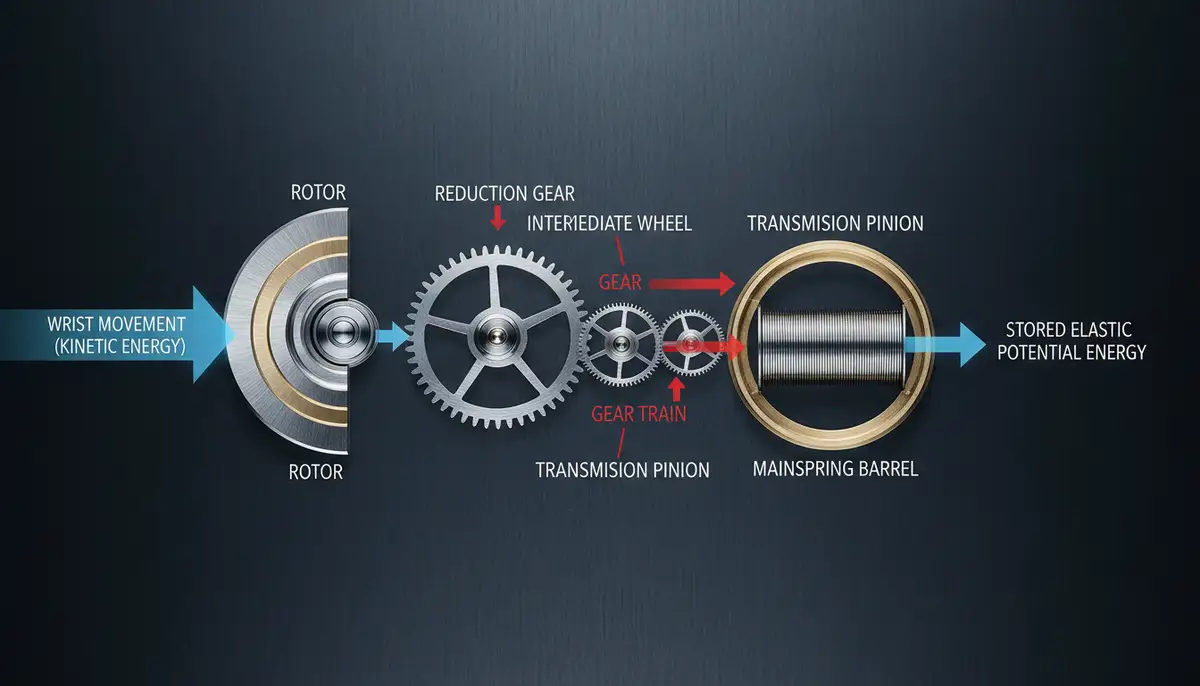
Advantages of Automatic Watches
Automatic watches offer several compelling advantages over their quartz counterparts. These benefits appeal to both watch enthusiasts and everyday wearers. They highlight why many prefer these mechanical wonders.
- No Battery Changes: This is perhaps the most significant benefit. You never have to worry about a dead battery or the cost and inconvenience of replacement. As long as you wear it, it runs.
- Craftsmanship and Heritage: Automatic watches are miniature mechanical masterpieces. They embody centuries of watchmaking tradition. Owning one connects you to a rich history of engineering and artistry.
- Continuous Operation: With regular wear, an automatic watch will keep running indefinitely. There's no need for manual winding (unless it has been left unworn for its power reserve duration).
Additionally, many automatic watches feature a 'sweeping' second hand. This glides smoothly around the dial. This is a visual treat compared to the 'ticking' motion of most quartz watches. The appreciation for this smooth movement is often a key factor for collectors. If you're weighing your options, you might find our detailed breakdown of digital vs analog watch choices helpful. It provides a great comparison for different watch types.
Disadvantages and Considerations
While automatic watches are impressive, they do come with certain considerations. It's important to be aware of these before making a purchase. They can impact your ownership experience.
- Accuracy Variations: Automatic watches are generally less accurate than quartz watches. They are mechanical devices subject to gravity, temperature, and shock. A typical automatic watch might gain or lose a few seconds per day.
- Maintenance Needs: These intricate machines require periodic servicing. This usually means a full overhaul every 5-7 years. This ensures proper lubrication and cleaning. Service costs can be significant.
- Cost: Due to their complex construction and craftsmanship, automatic watches are often more expensive than comparable quartz watches.
- Power Reserve Limits: If you don't wear your automatic watch for a few days, it will stop. You'll need to reset the time and either wear it or manually wind it to get it going again. A watch winder can solve this issue for multiple watches.
Power Reserve Explained
The power reserve of an automatic watch refers to the length of time it will continue to run when fully wound but not being worn. Most modern automatic watches have a power reserve of around 38 to 42 hours. Some higher-end movements can offer 70 hours or even several days of power reserve. This is achieved through larger mainsprings or multiple mainspring barrels. Knowing your watch's power reserve is important. It helps you decide if you need a watch winder.
Accuracy and Regulation
The accuracy of an automatic watch is a point of pride for many manufacturers. While not as precise as a quartz movement, high-quality automatic watches can be very accurate. Many movements are regulated to specific standards. The most well-known is COSC certification (Contrôle Officiel Suisse des Chronomètres). A COSC-certified chronometer must maintain an average daily rate of -4 to +6 seconds.
Factors like temperature, magnetic fields, and even the position the watch rests in can affect its accuracy. Regular servicing helps maintain optimal performance. Here's a quick look at common accuracy standards:
| Standard/Certification | Average Daily Rate (Tolerance) |
|---|---|
| COSC Chronometer | -4 to +6 seconds |
| METAS Master Chronometer | 0 to +5 seconds |
| Standard Automatic Movement | -15 to +30 seconds (varies by manufacturer) |
Maintaining Your Automatic Watch
Proper care and maintenance are essential for the longevity and performance of your automatic watch. Understanding how does an automatic watch work also means knowing how to care for it. These mechanical instruments require a bit more attention than a simple quartz watch.
- Regular Wear: The best way to keep your automatic watch running is to wear it. Consistent wrist movement keeps the mainspring wound.
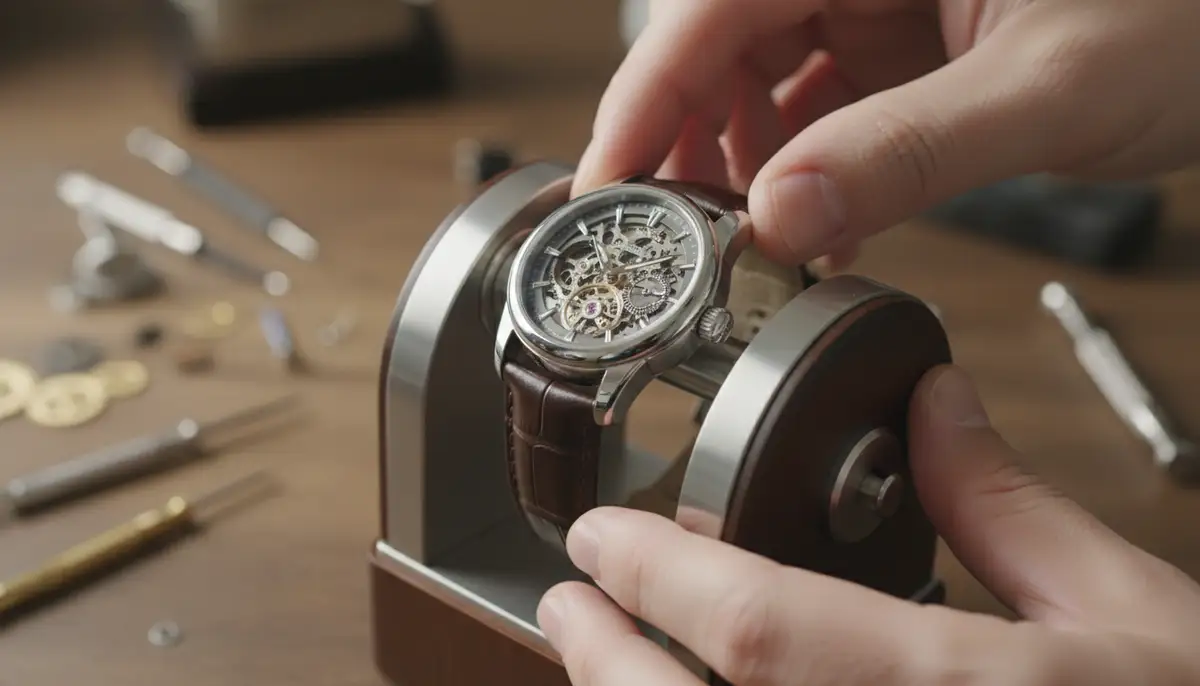
- Watch Winder (Optional): If you own multiple automatic watches and don't wear them daily, a watch winder can be a great investment. It simulates wrist movement to keep the watch wound and the time correct.
- Avoid Strong Magnetic Fields: Magnets can magnetize the delicate hairspring, causing the watch to run fast or stop. Keep your watch away from speakers, refrigerators, and certain electronic devices.
- Avoid Shocks: While many modern automatic watches are shock-resistant, extreme impacts can still damage the delicate internal components. Be mindful during strenuous activities.
- Regular Servicing: As mentioned, automatic watches need a professional service every 5-7 years. This involves disassembling, cleaning, lubricating, and regulating the movement. This is crucial for its long-term health. You can learn more about how an automatic watch operates and its maintenance from Mido Watches directly.
Following these simple care tips will ensure your automatic watch remains a reliable and beautiful companion for years to come. Neglecting maintenance can lead to costly repairs down the line.
Automatic vs. Other Watch Types
To fully grasp how does an automatic watch work, it helps to compare it with other popular types. Each watch type offers a different experience and set of characteristics.
- Manual-Wind Mechanical Watches: These are similar to automatics but lack the rotor. You must manually wind the crown daily to power the mainspring. They offer a direct connection to the mechanism.
- Quartz Watches: Powered by a battery and a vibrating quartz crystal, these are highly accurate and low-maintenance. They are generally more affordable but lack the mechanical artistry of automatics.
- Smartwatches: These are digital devices offering connectivity, health tracking, and customizable displays. They are a completely different category, focusing on technology over traditional mechanics. You can compare options like the Apple Watch vs Watch Nike for a deeper dive into smart wearable technology.
Automatic watches stand out for their blend of traditional craftsmanship and practical self-winding convenience. They offer a unique appeal that neither manual-wind nor quartz watches can fully replicate. The intricate dance of gears and springs is a spectacle in itself.
The Future of Automatic Watch Technology
The world of automatic watches is far from stagnant. Manufacturers continue to innovate. They improve accuracy, extend power reserves, and introduce new materials. Silicon components, for example, are becoming more common. They offer enhanced resistance to magnetism and temperature changes. This pushes the boundaries of traditional watchmaking.
We're seeing movements with longer power reserves, often up to 80 hours or more. This means your watch can sit unworn for an entire weekend and still be running on Monday morning. While traditional automatic watches are mechanical marvels, digital watch faces offer a different kind of customization and innovation for smartwatches. At WatchMaker, we provide thousands of watch faces for Apple Watch and WearOS devices. You can personalize your smartwatch experience. Companies like Pujie Black, buddywatch.app, and amoledwatchfaces.com also offer impressive solutions in this space. However, WatchMaker prides itself on its vast selection and user-friendly customization tools.
Choosing Your Perfect Automatic Watch
When selecting an automatic watch, consider several factors. Your personal style is key. Do you prefer a classic dress watch, a robust diver, or a sporty chronograph? The brand also plays a role. Established brands often have a long history of reliable movements. However, newer microbrands can offer excellent value.
- Movement Quality: Research the specific movement inside the watch. Is it an in-house movement or a reliable workhorse like an ETA or Miyota? Quality movements often translate to better accuracy and longevity.
- Power Reserve: Consider how often you'll wear the watch. A longer power reserve is beneficial if you rotate watches frequently.
- Water Resistance: If you plan to wear your watch near water, ensure it has adequate water resistance for your activities.
- Budget: Automatic watches range from a few hundred dollars to tens of thousands. Set a realistic budget and explore options within that range.
Ultimately, choosing an automatic watch is a personal journey. It's about finding a timepiece that resonates with you. It should reflect your appreciation for mechanical artistry. It's an investment in a piece of enduring craftsmanship. Knowing how does an automatic watch work empowers you to make an informed choice.
Conclusion: The Enduring Charm of Mechanical Ingenuity
The question of how does an automatic watch work reveals a captivating world of micro-engineering. It's a testament to human ingenuity. From the rhythmic swing of the rotor to the precise tick of the escapement, every component plays a vital role. These watches are more than just time-telling devices. They are living machines, powered by your very own movements.
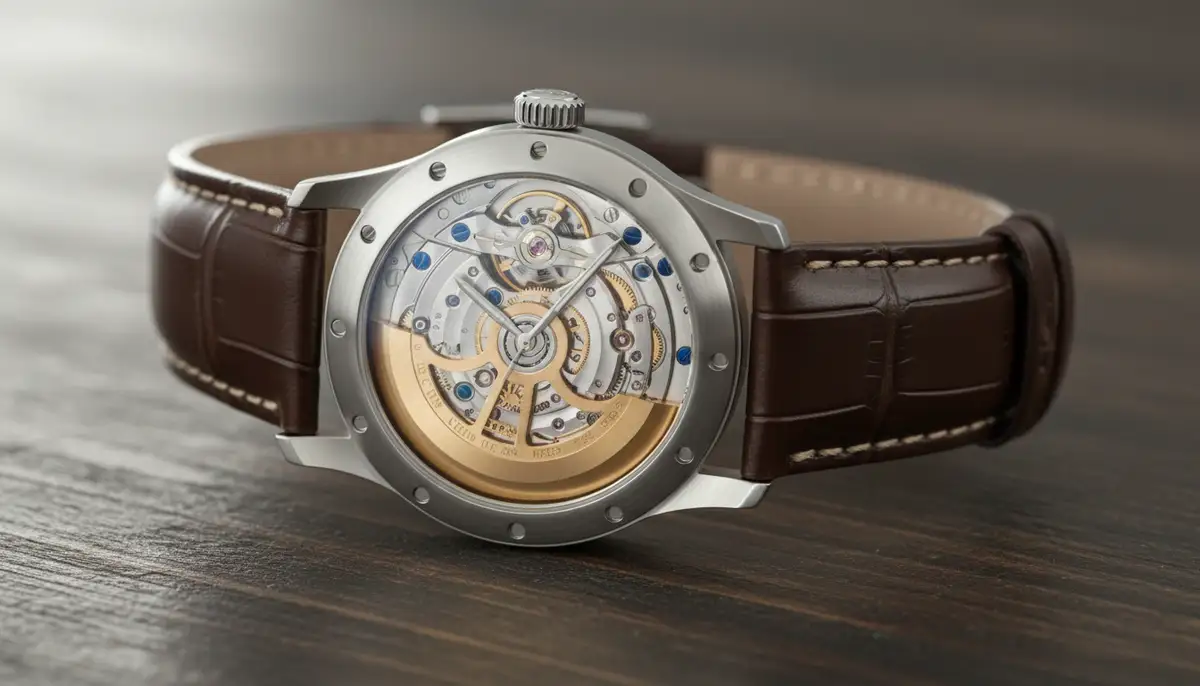
Owning an automatic watch is an experience. It connects you to a rich tradition of horology. It also provides a sense of wonder at the intricate mechanics. We hope this guide has demystified the inner workings of these incredible timepieces. Now you understand the intricate dance that answers, how does an automatic watch work. Whether you prefer the timeless elegance of a mechanical watch or the modern versatility of a smartwatch with custom faces, there's a world of horological wonder waiting for you. Don't forget to explore our vast collection and download watch faces to personalize your digital timepiece experience.
Related Posts

The Watch Face Mistake Almost Every New Garmin Owner Makes
There's a predictable arc to owning a new Garmin. Day one, you install a watch face that shows everything: heart rate, steps, battery, weather, two time zones,...

The Ultimate Apple Watch Strap Guide: Find Your Perfect Fit & Style in 2025
Introduction: Your Essential Apple Watch Strap Guide for 2025 Your Apple Watch is more than just a gadget. It's a personal statement, a fitness tracker, and a...